
Researchers claim OpenAI scooped their groundbreaking work; company disagrees
On Tuesday, September 8th, OpenAI, the company behind ChatGPT, announced that they had solved the Navier-Stokes problem, one of the most famous unsolved questions in all of mathematics (1). In the year 2000, the Clay Mathematics Institute, based here in Cambridge, Massachusetts, named the Navier-Stokes problem one of the seven Millennium Problems, each of which carries a one-million-dollar prize if solved (2). If OpenAI’s claim is verified, then it would be the most advanced mathematical problem AI has ever solved. Even more intriguing, however, is the sheer amount of controversy about who should receive the credit for this result.
Two researchers had been working on this same problem for over a year using OpenAI and Anthropic products (3). Right as they neared a solution, OpenAI suddenly began pouring millions of dollars into the problem (3). Many have raised questions about whether ChatGPT stole their data to train itself to solve the equation, but OpenAI has rejected this claim (3,1).
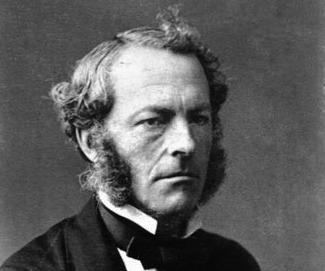
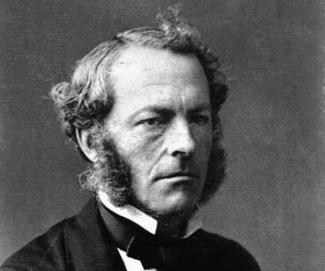
Two hundred years before any of the drama unfolded, Charles-Louis Navier and George Gabriel Stokes developed an equation to track the changes in motion of a fluid (4). Remember, here fluid doesn’t just mean water, but anything that can flow (5). The motion of fluids can be influenced by four things: their existing momentum, pressure differences, viscosity, and outside forces, like gravity (5). What makes these equations special, though, is that they treat the fluid as a continuous substance rather than individual molecules (5). This means that these equations don’t perfectly model the real world, which implies that there could be some scenarios when the equations produce impossible outcomes (4). In essence, the “solution” to the Navier-Stokes equations asks whether they can produce these physical impossibilities or whether Navier and Stokes had it right all along (4).
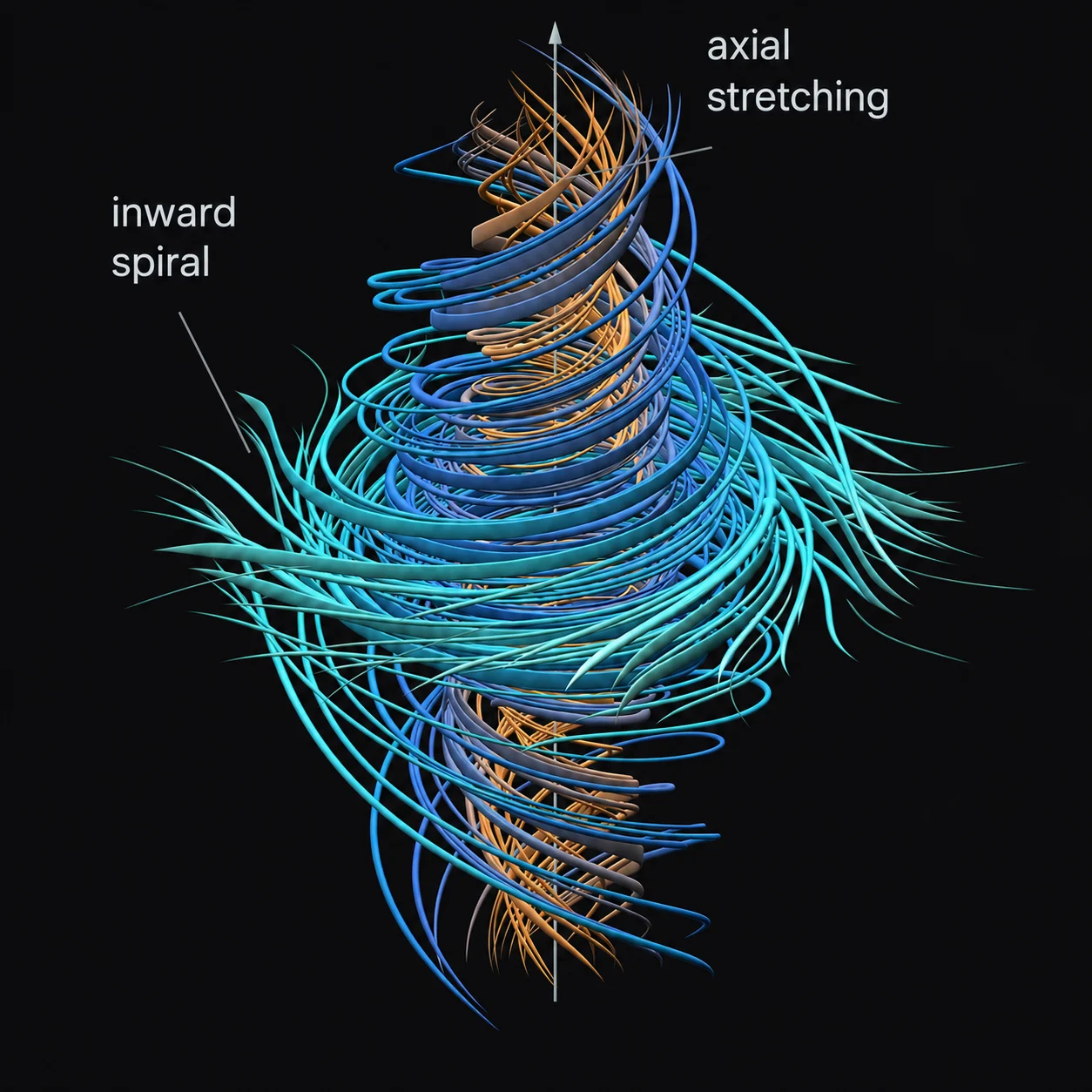
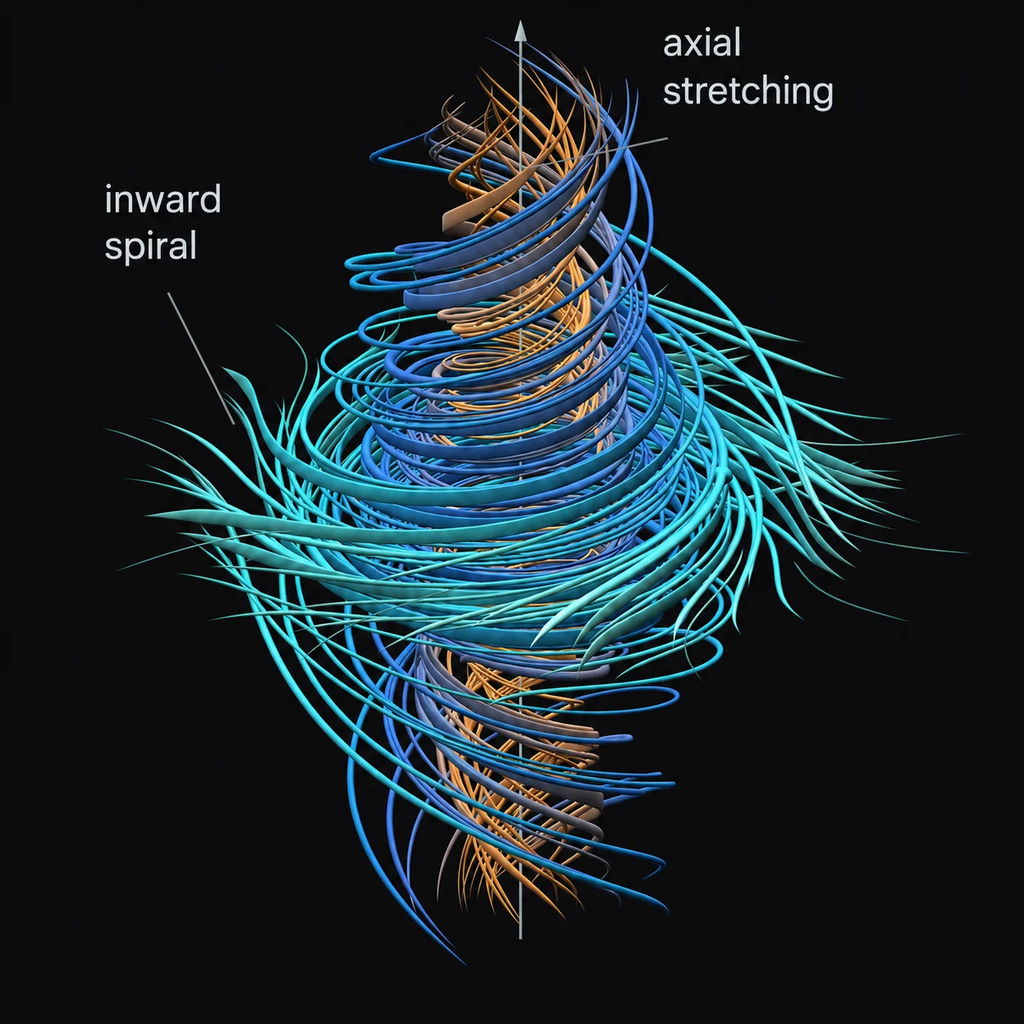
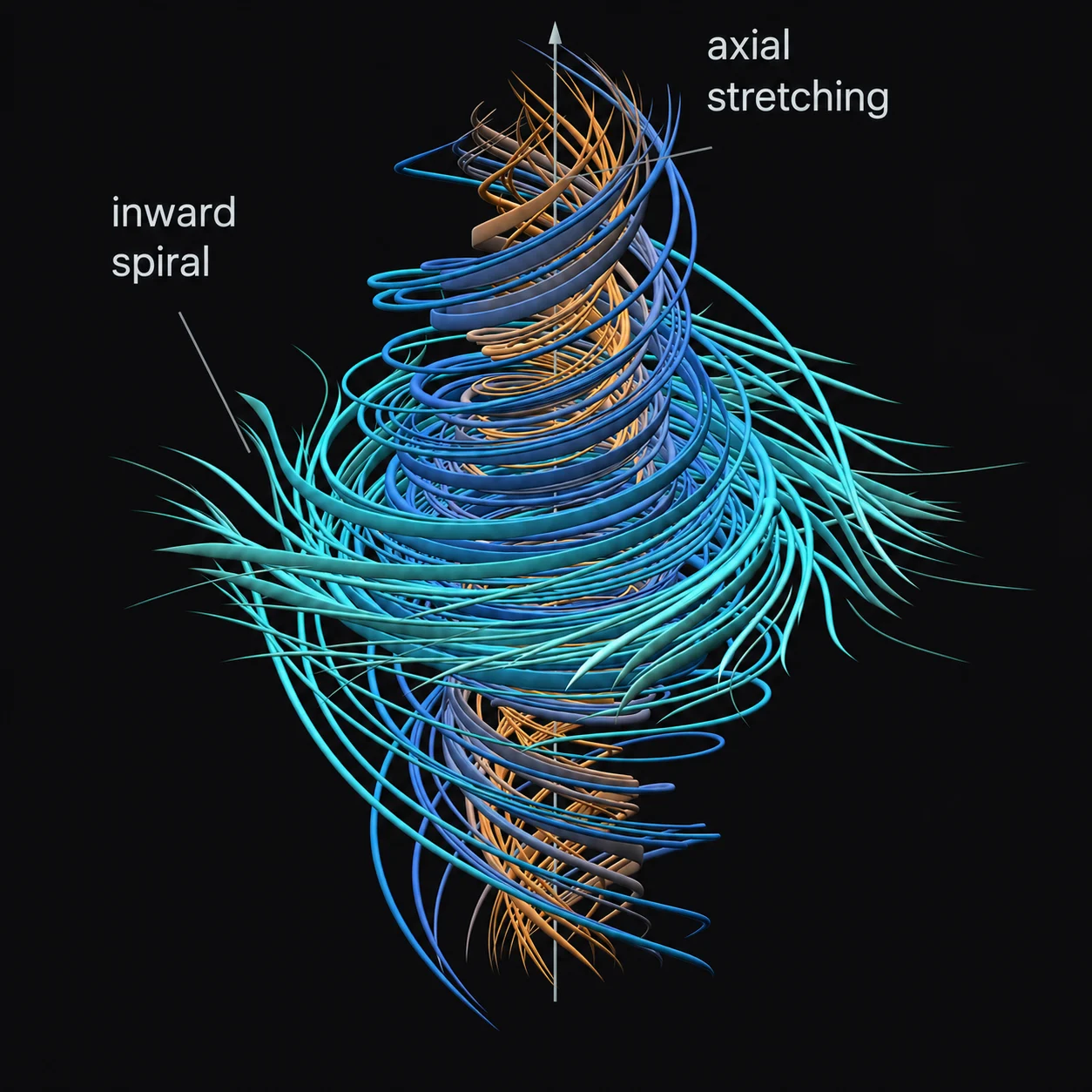
So, the question that’s on every mathematician’s mind: How’d OpenAI do it? On September 1st, researchers at OpenAI heard a rumor that one of the million-dollar problems had been solved (1). Inspired by these rumors and the rapid mathematical improvements of their own internal model, reportedly more powerful than GPT-6, they launched an effort to evaluate the Navier-Stokes equation (1). Using a team of chatbots, in just 88 hours, they developed a solution (1). The process took 4.9 million messages sent between nearly 10,000 agents, which equates to almost 15 million dollars in computing power. In the end, they disproved the Navier-Stokes equations by finding a specific scenario where a fluid becomes a vortex with infinite speed (6). OpenAI does not intend to claim the one-million-dollar prize attached to their discovery (1).
For the past year, NYU mathematician Tristan Buckmaster and Levent Alpöge, a researcher affiliated with Anthropic, the makers of Claude, have used a combination of AI tools, including OpenAI’s Codex, to tackle this equation (3). Around the same time OpenAI made its discovery, their own agents found a solution to a simplified version of the problem, where the factor of viscosity is removed (6,3). However, their proof was in Lean, a mathematical coding language, and what they refer to as “AI slop” (3,7). Since then, the pair have worked at transforming the unreadable solution into a publishable paper, rather than rushing to announce a half-baked result (3).
At the same time as rumors about one of the million-dollar problems being resolved were circulating, Levent received a tip that OpenAI had caught wind of their work. Buckmaster then sent an email to the company (3). He didn’t name the problem they were working on, but he emphasized that his and Alpöge’s work was completely unaffiliated with any organization and strictly personal (3). According to Buckmaster, OpenAI was willing to give him the million-dollar prize as long as Alpöge’s name was removed from the discovery (3). Buckmaster refused, partially because the company hadn’t given him an answer on whether the agents had access to the duo’s logs on Codex (3). OpenAI claims that the agents had not seen any of their work before it was published, but acknowledges the possibility of their anonymous work being used in the model’s training (1).
Regardless of who will receive the credit for this discovery, this event marks one more blow to the methods of traditional mathematics (8). Many independent researchers fear that their work will soon become obsolete in the face of the brute force of AI (8). “We have now seen that even the rumor of someone working on a problem can trigger a massive amount of AI-powered effort to flatten it,” said renowned mathematician Terrence Tao on social media platform Mathstodon (9). In addition, the few AI companies with the spare resources to make massive leaps in scientific progress aren’t likely to continue to solve problems if there isn’t any profit (4).
On the other hand, OpenAI says its experience with Navier-Stokes opens the door for bigger and more complex problems. “We are now able to spend millions of dollars on a problem that we really care about and that really matters: developing new materials and finding cures to diseases,” OpenAI researcher Sébastien Bubeck said in a briefing on the subject (4). “All of those things that we have been talking about for a long time—now they seem to be at our fingertips,” (4). This milestone, regardless of the discourse surrounding it, marks a turning point in both AI and mathematical research. However, only time will tell if it’s for the better or for worse.
Bibliography:
- OpenAI. (2026, September 23). On the Navier–Stokes Millennium Prize Problem. OpenAI. https://openai.com/index/navier-stokes-solution/
- Navier-Stokes Equation – Clay Mathematics Institute. (2022, May 27). Clay Mathematics Institute. https://www.claymath.org/millennium/navier-stokes-equation/
- Tristan, & Levent Alpöge. (2026, September 3). Publication of finite-time blowup results with smooth forcing for incompressible porous media, Boussinesq, and 3D incompressible Euler equations [Research announcement]. https://cims.nyu.edu/~tristanb/statement.pdf
- How an AI math breakthrough ignited a controversy. (2026). AAAS Articles DO Group. https://doi.org/10.1126/science.z8pi0tt
- What Are the Navier-Stokes Equations? (2017). Comsol.Com. https://www.comsol.com/multiphysics/navier-stokes-equations
- OpenAI. (2026, September 8). Finite Time Blowup for Navier–Stokes. Openai.Com; OpenAI. https://cdn.openai.com/pdf/32d9f210-8b73-45e0-91bc-82a30aef8a9a/navier-stokes.pdf
- lama, D. (2026). A Critical Analysis of OpenAI’s Claimed Solution to the Navier-Stokes Millennium Prize Problem: Methodology, Verification, and Controversy. https://doi.org/10.2139/ssrn.7445539
- OpenAI breakthrough triggers ‘existential crisis’ in math. (2026). AAAS Articles DO Group. https://doi.org/10.1126/science.zbgmw3q
- Tao, T. (2026, September 8). Terence Tao (@tao@mathstodon.xyz). Mathstodon. https://mathstodon.xyz/@tao/117237320796901560
Image Citations:







Comments are closed.