
Scientists discover debris on Mercury’s surface has been obscuring the planet’s shrinkage.
Mercury is widely known as the innermost planet in our solar system because it is closest to the Sun, but did you know that Mercury is shrinking? Scientists have concluded that wrinkles on Mercury’s surface suggest that the planet has been shrinking since its formation around 4.5 billion years ago. In the past, they estimated that Mercury had only shrunk by a few miles since its formation. However, on September 10, 2026, a new estimate for Mercury’s shrinking rate was published by Gaku Nishiyama and his team at the German Aerospace Center (DLR) in the journal Geophysical Research Letters (1).
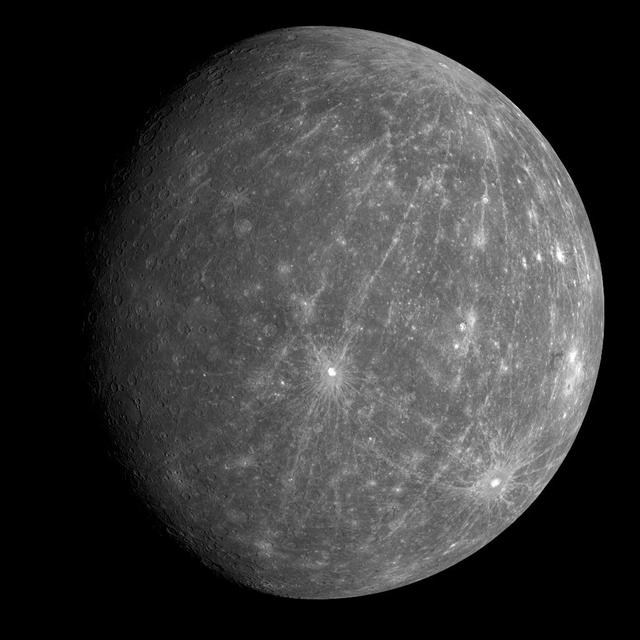
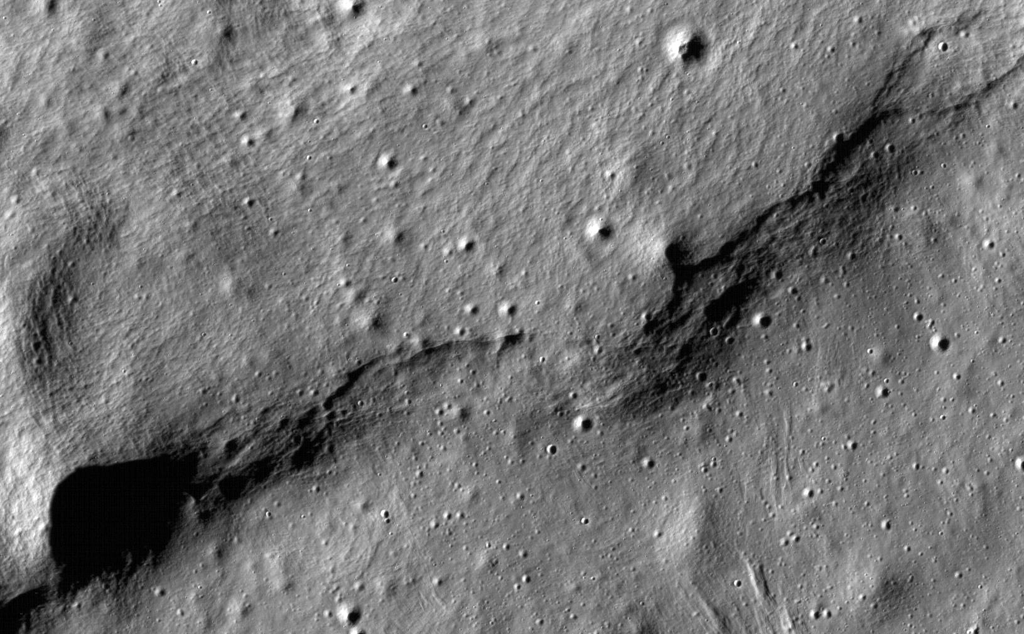
“Many bodies, like the Moon and Mars, are shrinking nowadays,” Nishiyama explains, “but in the case of Mercury, it can shrink more because of its large metal core.” When Mercury first formed, all the rocks and asteroids orbiting the Sun collided with each other (1). The combined energy from these impacts generated large amounts of heat, which has been dissipating since the planet’s formation. The cooling of Mercury’s core causes it to shrink; thus, the outer rocky shell wrinkles and warps to form tectonic structures like wrinkle ridges and lobate scarps, which are cliff-like structures (3).
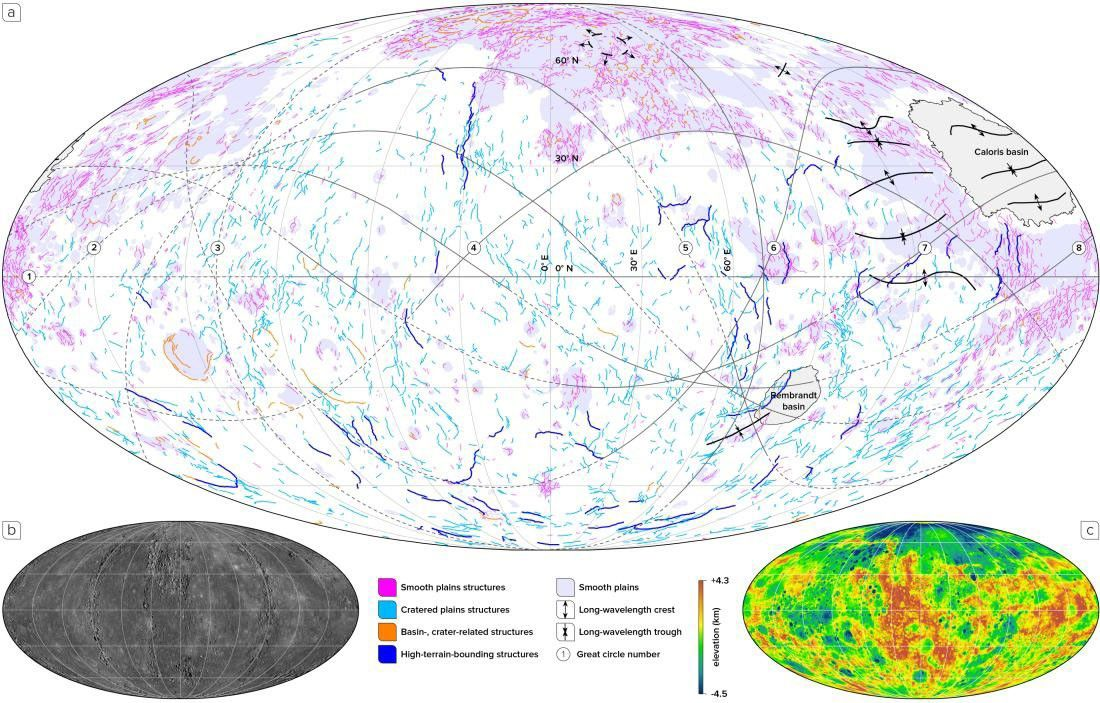
These ridges and wrinkles on the planet’s surface should appear evenly across the planet, but Mercury’s surface is riddled with old and new impact craters, which create depressions and cover the surface in debris (1). This made the wrinkles, known as shortening structures, harder to spot among everything on Mercury’s surface (1).
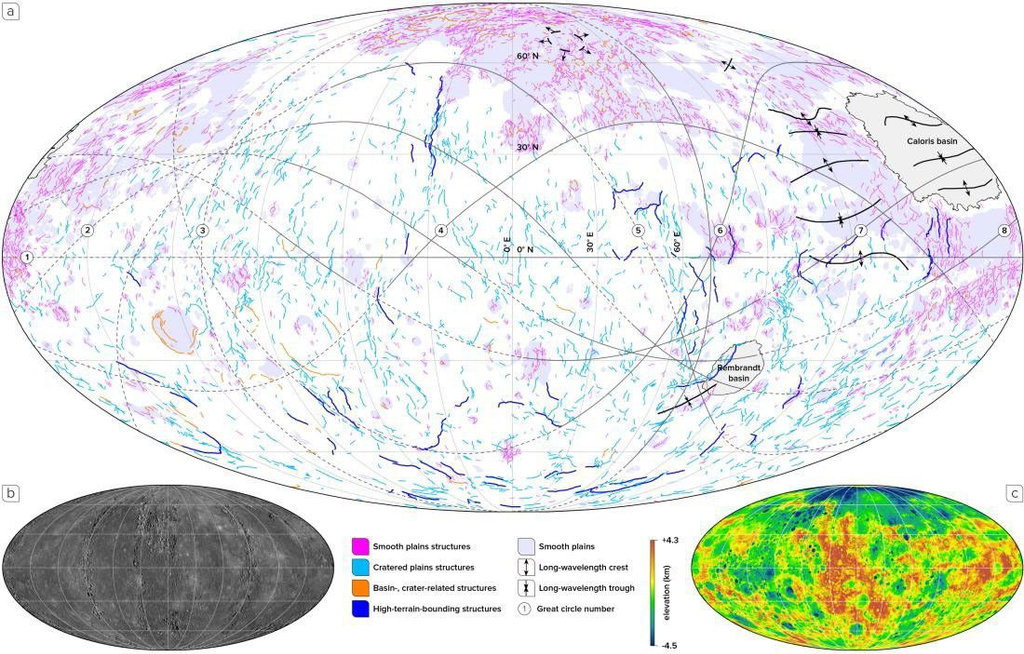
How did Nishiyama and his team develop this new estimate? Researchers used images from the 2004 flyby of NASA’s MESSENGER spacecraft and more recent digital models to compare the surface structures (2). This revealed that the roughest areas on Mercury have fewer visible wrinkles, leading the team to conclude that surface debris could have been covered by surface shortenings (4).
After all the comparisons, Nishiyama and his team suggest that Mercury has been shrinking up to 30% more than previously predicted, by up to 14.5 miles, nearly 1% of its 1516-mile radius (2). However, this estimate is tentative due to shortcomings in the data. Fortunately, in November, the European Space Agency and Japan Aerospace Exploration Agency’s BepiColombo will become the second spacecraft to ever enter Mercury’s orbit, providing a close-up view of the planet (1, 2).
Understanding Mercury’s shrinkage provides a look into its core and evolutionary history (1). “Every planet is an odd little duck that has a story to tell,” says Sam Birch, a planetary geoscientist at Brown University. “If you can understand how fast Mercury is shrinking, you can understand how fast it’s cooling, what size it started at, and what it’s made out of” (2, 5). As such, this discovery is just the beginning of learning more about Mercury’s shrinkage.
Bibliography:
- Nishiyama, G., Broquet, A., Tosi, N., Preusker, F., Stark, A., Hußmann, H., & Hauber, E. (2026). Underestimation of Planetary Contraction due to Obscuration by Surface Roughness: The Case of Mercury. Geophysical Research Letters. https://agupubs.onlinelibrary.wiley.com/doi/10.1029/2026GL124067
- Callawy, K. R. (2026, September 14). Mercury Is Shrinking, and Faster Than We Thought. The New York Times. https://www.nytimes.com/2026/09/11/science/space/mercury-shrinking-wrinkles.html
- MESSENGER. (2014, March 19). The Incredible Shrinking Mercury. NASA photojournal. https://science.nasa.gov/photojournal/the-incredible-shrinking-mercury/
- Nature (2026). (657, 859). Mercury is shrinking with age — faster than thought. Nature. https://doi.org/10.1038/d41586-026-02898-3
- Hashemi S. (2026, September 22). Mercury Has Wrinkles That Show It’s Shrinking. Now, Scientists Say the Planet Has Shriveled Far More Than Previously Thought Smithsonian Magazine. https://www.smithsonianmag.com/smart-news/mercury-has-wrinkles-that-show-its-shrink ing-now-scientists-say-the-planet-has-shriveled-far-more-than-we-previously-thought-180989532/
Image Citations:






Comments are closed.