
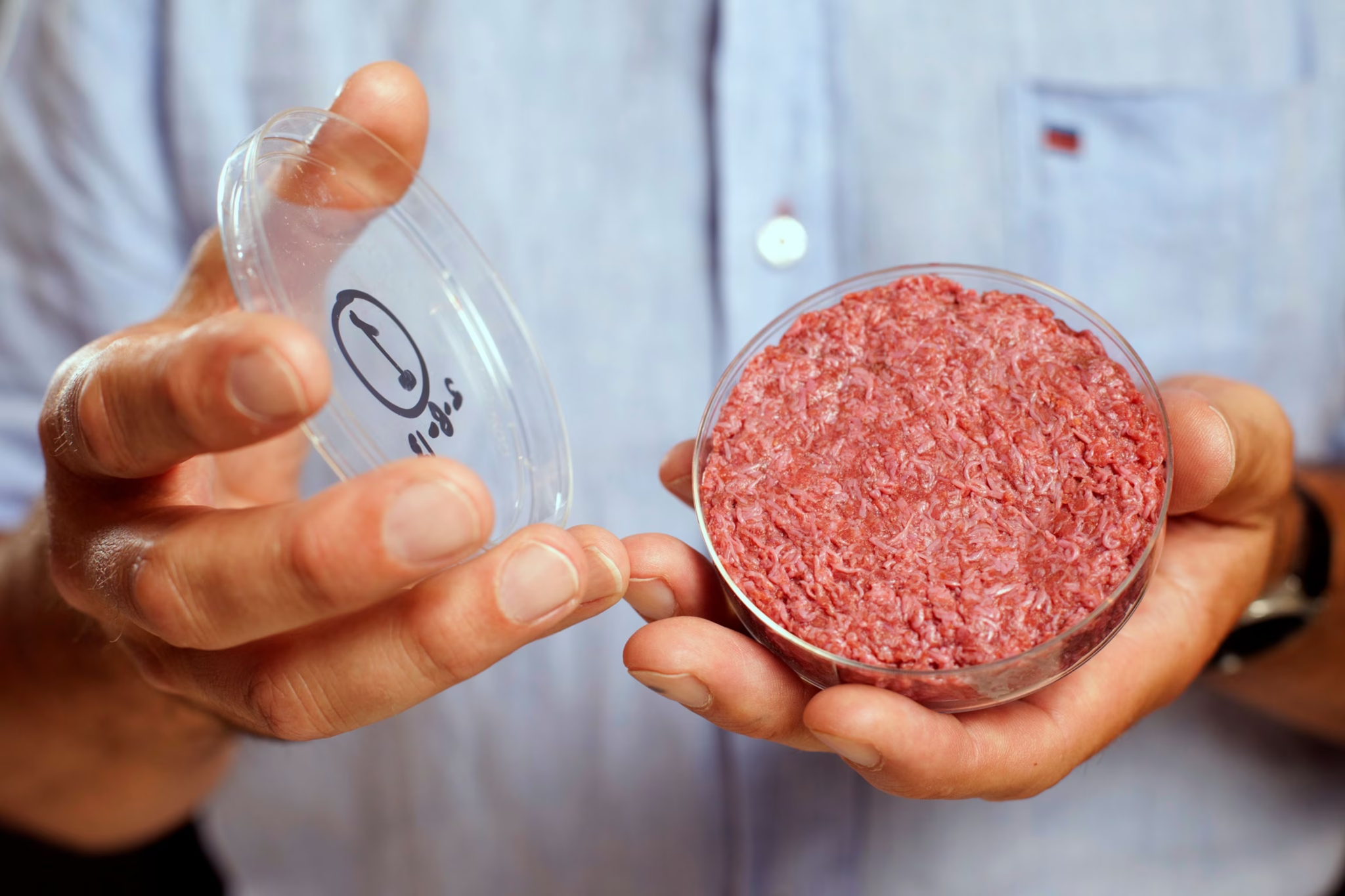
Learning about lab-grown meat could alleviate many of the fears modern consumers have.
As farming practices have evolved, agriculture has become more and more efficient, feeding approximately 8 billion people daily. Now, humanity has achieved one of the largest agricultural breakthroughs of all time: lab-grown meat.
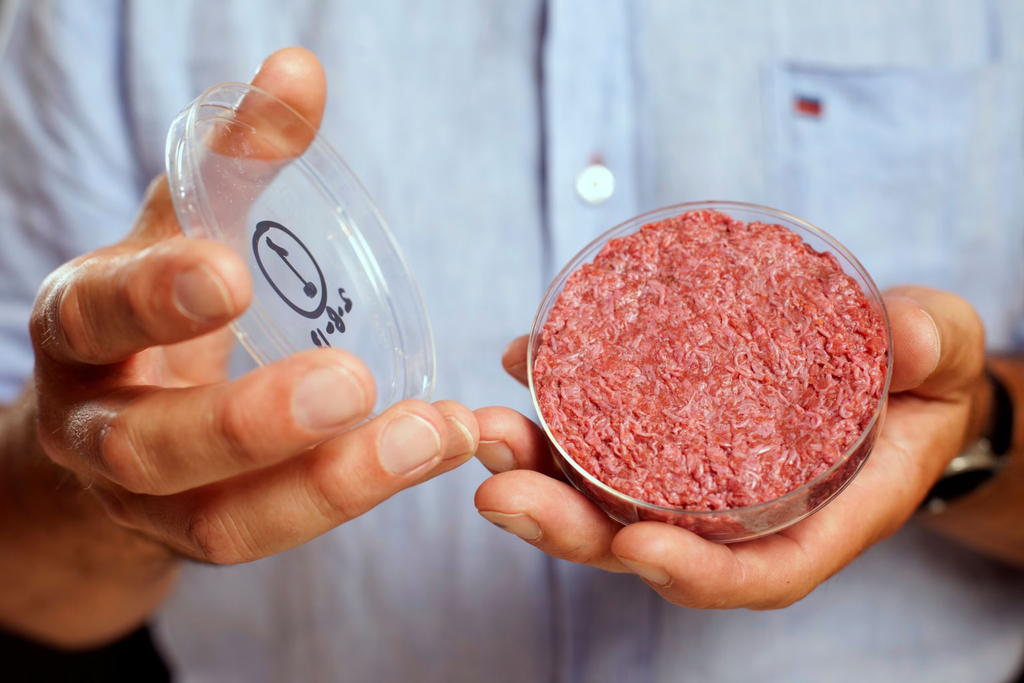
Though it seems novel, scientists first began experimenting with growing meat artificially in 2002, when geneticists grew a fish fillet made entirely from cultured goldfish cells. Later, in 2013, the first lab-grown hamburger was eaten at an event in the Netherlands. However, the hamburger cost a whopping $330,000 to create, making it an exciting but incredibly impractical breakthrough (1). It wasn’t until the FDA approved synthetic meat for mass consumption in 2022 that videos about cultured meat blew up on social media sites like TikTok and Instagram (2). Reactions to lab-grown meat online were intense: many people had strong opinions against it, often without knowing what “synthetic meat” actually meant or what its potential upsides and downsides were.
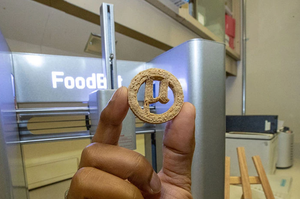
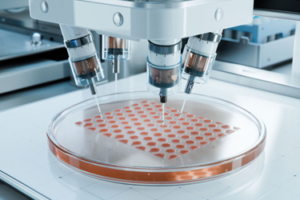
So, what is lab-grown meat? Cultured meat is created when animal cells are cultivated in vitro, or “outside the body.” Usually, small samples of animal tissue are grown into larger tissues in culture flasks, and fed with specific nutrients (3). Some of the cultured meat stays unmodified, making it genetically identical to traditionally farmed meat. Other samples are changed, genetically modified to make the cells multiply indefinitely or given essential nutrients like omega-3 fats. No genetic modification is necessary to cultivate lab-grown meat, which disproves the claim that all synthetic meat is genetically modified (1).
Lab-grown meat could both eliminate nearly all animals suffering in slaughterhouses, and possibly improve public health. By growing meat in a lab, scientists reduce the risk of antibiotic resistance, which often occurs when livestock is fed antibiotics to promote growth and prevent infections in often unsanitary conditions. This is because when antibiotics are used, bacteria often evolve to survive them. Therefore, growing meat in sanitary conditions with no antibiotics could alleviate the problem of widespread antibiotic resistance (4).

However, lab-grown meat has its drawbacks: currently, it is more environmentally harmful to grow meat in a lab than to farm traditionally. Additionally, a new market for lab-grown meat could potentially hurt livestock farmers. Lab-grown meat is also incredibly expensive to produce, coming in at a production cost of around $40 per pound, not accounting for price increases manufacturers would have to implement to make it retail-ready (3).
Despite the growing conversation around synthetic meat, it will likely take another 5-10 years for it to become available, as production must be commercialized in order to cut costs and make lab-grown meat appealing to consumers (5). Cell cultured meat is one of the greatest agricultural breakthroughs of the century, though it is now essential for scientists and marketers to educate the public and challenge the idea that lab-grown meat is gross and artificial, creating future where lab-grown meat is seen as a better alternative.
Bibliography:
- Mah, A. (2025, August 13). Lab-Grown Meats Will Change the Food Industry Forever – Synthego. Synthego. https://www.synthego.com/blog/lab-grown-meats/
- Eufic. (2023, March 17). Lab grown meat: how it is made and what are the pros and cons. Www.Eufic.Org. https://www.eufic.org/en/food-production/article/lab-grown-meat-how-it-is-made-and-what-are-the-pros-and-cons
- Rhodes, D. (2024, February 28). Lab-grown meat: Stupid, costly and unnecessary. Friends of Animals. https://friendsofanimals.org/lab-grown-meat-stupid-costly-and-unnecessary/
- Anomaly, J., Browning, H., Fleischman, D. S., & Veit, W. (2023). Flesh without blood: The public health benefits of lab‐grown meat. Journal of Bioethical Inquiry, 21. https://doi.org/10.1007/s11673-023-10254-7
- Whiting, K. (2020, October 16). When will we be eating lab-grown meat? World Economic Forum. https://www.weforum.org/stories/sustainable-development/will-we-eat-lab-grown-meat-world-food-day/






Comments are closed.