
How resurrection biology has the potential to revive extinct species
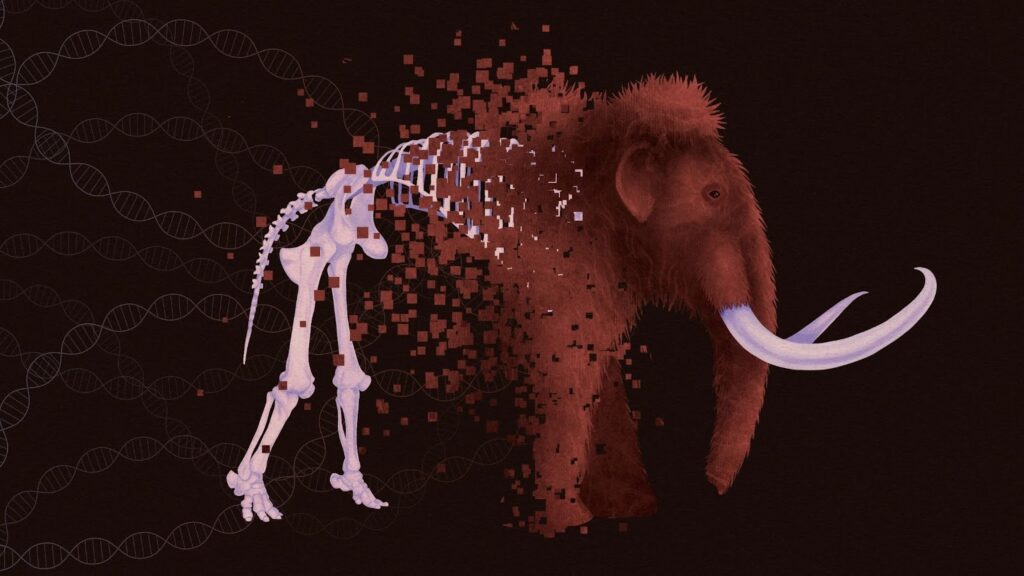
Imagine on your walk through Boston Common, you see woolly mammoths foraging for food next to you and your family. This idea could become a reality through recent developments in resurrection biology, the process of generating new versions of extinct species (1). Scientists believe there are compelling arguments to preserve biodiversity through de-extinction. Lost species can play key roles in maintaining ecosystems (2). Additionally, many believe it is crucial to preserve the environment from drastic changes such as poaching and global warming. De-extinction is most important for informing society about the current problems the environment faces and the extinction risk some organisms face. Resurrection biology has the potential to fundamentally transform ecosystems and the way we live life.
De-extinction began as early as 1835, when Feliks Paweł Jarocki, a Polish zoologist, proposed that selective breeding of cattle to highlight specific traits could bring back the auroch, an extinct Eurasian species (3). In 2004, American scientists made a major advancement by partially recreating the influenza virus after recovering a frozen body that contained parts of it. The scientists then rebuilt the entire virus by adding the missing parts from previous information. Soon after, in 2008, Australian researchers used genetic material recovered from a Tasmanian tiger and implanted it into the genomes of mice. In 2016, synthetic-biology company Gingko Bioworks isolated the scent molecules from herbaria, a type of plant, to be replicated in perfumes. More recently, companies like Colossal Biosciences, specializing in de-extinction, have worked on projects to recreate extinct species or reintroduce their traits (4).
Resurrection biologists take three main approaches to de-extinction: back-breeding, cloning, and genome editing. Back-breeding is the artificial selection of animals to breed so that, over multiple generations, specific traits are highlighted to replicate their early ancestors. Cloning involves replicating a somatic (non-reproductive) cell from an extinct species into a host egg via nuclear transfer. However, scientists mainly approach resurrection biology through synthetic genomics, primarily using CRISPR. This is done by inserting a modified DNA fragment from an extinct species into the nucleus of a reproducing cell, which blends the desired traits, creating a hybrid organism that represents the extinct species (1).
In recent years, Colossal Biosciences has successfully recreated hybrid formations of the dire wolf and woolly mammoth. The scientists achieved this by collecting DNA from fossils of extinct species and their closest living relatives. Then, they sequenced their genomes and compared them to see the differences in the DNA samples. Using CRISPR, they added the genome of these special traits to the host cells to create hybrid cells. The modified DNA was placed into an embryo, which was implanted into a surrogate of the modern-day animal to produce a hybrid of the extinct and current species (1).
While there has been rapid progress in de-extinction, scientists still face many ethical concerns and technological issues. Ethical problems include the welfare of the host animals and damage to the ecosystem from sudden changes (5). Technical issues persist even further. A study done on the Christmas Island rat revealed how 5% of the genome was unrecoverable, resulting in some specific traits being consistently missing (6).
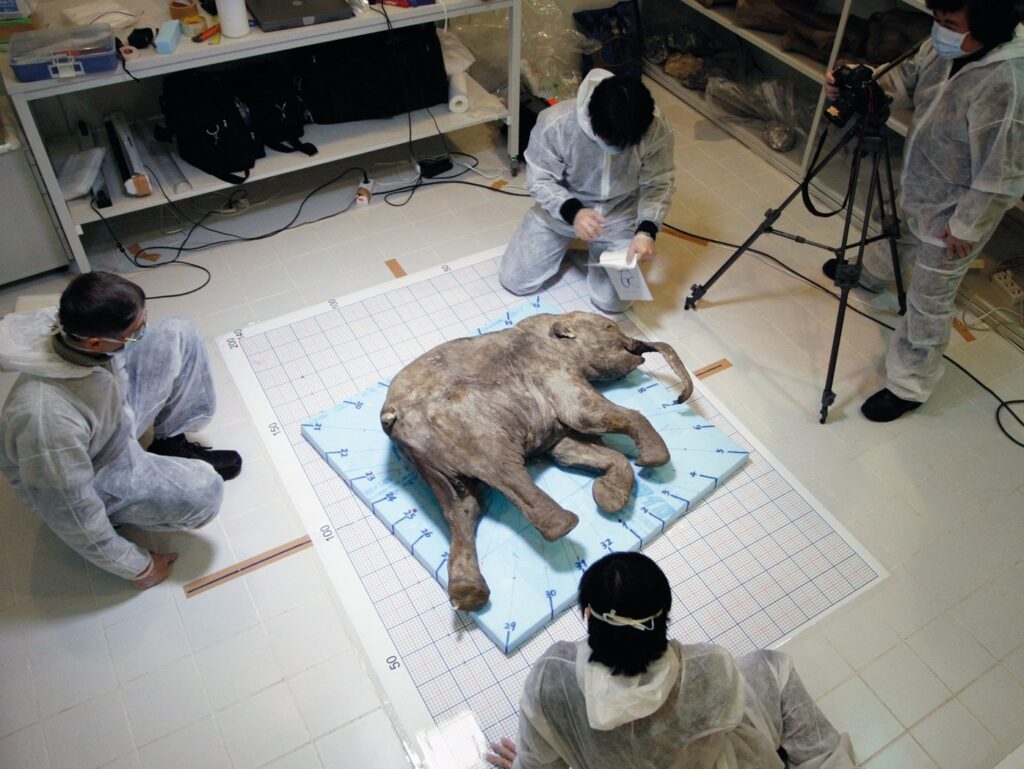
With improvements being made every day, resurrection technology has great potential to transform the world’s ecosystem and life in general. However, the persisting ethical concerns and remaining experimental difficulties limit the full application of this breakthrough. As more research evolves, de-extinction can serve as a way for scientists to restore biodiversity in ecosystems across the world
Sources:
- Ord, S. (2022). How De-Extinction Works: Methods, Examples and Step-by-Step Process, Colossal. https://colossal.com/how-de-extinction-works/
- Brand, S. (2013, March 11). Why Revive Extinct Species?, ReviveRestore. https://reviverestore.org/why-revive-extinct-species/
- Moynihan, T. (2025, May 20). The strange history of de-extinction began long before the science, Big Think. https://bigthink.com/the-past/the-strange-history-of-de-extinction-began-long-before-the-science/
- Regaldo, A. (2025, March 7). The short, strange history of gene de-extinction, MIT Technology Review. https://www.technologyreview.com/2025/03/07/1112880/the-short-strange-history-of-gene-de-extinction/
- Sandler, R. (2014, April 28). The ethics of reviving long extinct species. https://pubmed.ncbi.nlm.nih.gov/24372907/
- (2022, April 11). Probing the genomic limits of de-extinction in the Christmas Island rat. ScienceDirect, 32(7) 1650-1656. https://doi.org/10.1016/j.cub.2022.02.027
Images:






Comments are closed.