
How is it produced, and how can we utilize it?
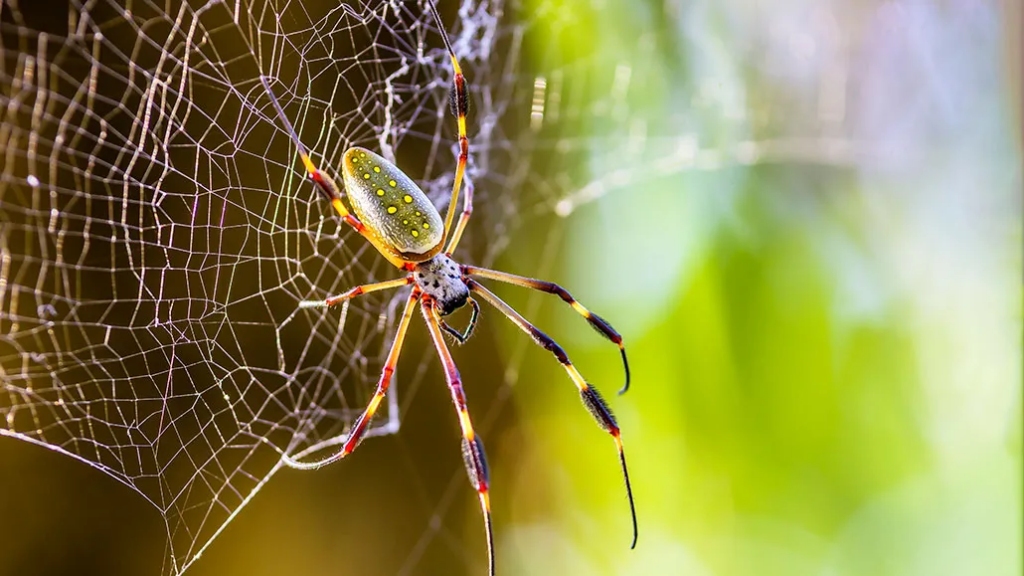
You have likely seen a spider web at some point in your life, but did you know that the silk itself is stronger than steel (1)? Scientists have been fascinated by spiders and their silk for years, but only within the last decade have we truly begun to harness their abilities.
Spider silk has unique mechanical properties and characteristics due to spidroins, the structural proteins that make the silk. The genome sequences that express spidroins are highly repetitive. Scientists have been able to identify the relationships between some amino acid sequences in spidroins with the properties of spider silk fibers (2). As these proteins are extremely versatile in their applications, scientists have attempted to mimic their properties, structure, and function. Understanding the sequences of spidroins allows for the production of recombinant spider silk proteins (rSSP), which are the genetically modified versions of the originals. These proteins would be similar to their natural counterparts but with targeted properties that can be used for different purposes (1). This has made spider silk of great interest to scientists during the search for customizable and high-performance materials, as the ability to change their amino acid sequences offers customization of their mechanical properties. For example, this spider silk can absorb up to 100,000 joules of kinetic energy, giving it high potential for use in blast protection. Compared to hot-rolled steel, the silk also has a five times higher stress strength. The material itself is lighter, thinner, more flexible, and much more durable than typical kevlar.
These findings led to the conclusion that utilizing spider silk could be extremely beneficial for commercial uses. However, there are two major barriers stopping mass production. First, commercial production would be difficult because of how cost-ineffective and time-consuming it would be (2). Second, it would be incredibly difficult to obtain enough silk from spiders because of their territorial and cannibalistic natures (3).
As spiders are not ideal for producing silk in large quantities, scientists started experimenting with other host organisms to produce the silk. The gene that produces spidroins was introduced into bacteria, yeast, insects, mammals, and plants, producing a protein powder rather than the physical silk fiber because most host organisms can not actually spin the spidroins into fibers. This power has made small creations, but it would need to be purified first, which would take too much time and money (1). As a result, scientists were still in search of a host organism that could produce spider silk fibers. Kraig Laboratories, a leading group working with biologically engineered spider silk, tried using domesticated silkworms to produce spider silk. Silkworms are commercial producers already, with their silk glands making up 40% of their weight (2). The majority of recombinant hosts with the genes to produce the spider silk cannot spin silk into fibers; however, silkworms can, making them the ideal host organism. Kraig Laboratories inserted the rSSP into the silkworm’s DNA using piggyBac vectors, a genetic tool that moves DNA. These vectors carried genes that made spidroins in the posterior silk gland, along with an enhancer, which ensured the proteins were spun into fibers with more elasticity and strength (3).
All of the work put into producing spider silk with enhanced properties proved that the speculations scientists have had for years could be greater than they ever imagined. Genetically engineered spider silk is a promising and exciting new frontier that is still being researched today, so next time you run into a spider web, stop and wonder what more secrets lie within those silks.
Sources:
1. Bittencourt, D. M. de C., Oliveira, P., Michalczechen-Lacerda, V. A., Rosinha, G. M. S., Jones, J. A., & Rech, E. L. (2022). Bioengineering of spider silks for the production of biomedical materials. Frontiers in Bioengineering and Biotechnology, 10. https://doi.org/10.3389/fbioe.2022.958486
2. Spider Silk – Kraig Biocraft Laboratories. (2014, October 13). Kraig Biocraft Laboratories – the Future Is Made in the Laboratory. https://www.kraiglabs.com/spider-silk/#anchor
3. Teulé, F., Miao, Y.-G., Sohn, B.-H., Kim, Y.-S., Hull, J. J., Fraser, M. J., Lewis, R. V., & Jarvis, D. L. (2012). Silkworms transformed with chimeric silkworm/spider silk genes spin composite silk fibers with improved mechanical properties. Proceedings of the National Academy of Sciences, 109(3), 923–928. https://doi.org/10.1073/pnas.1109420109







Comments are closed.