
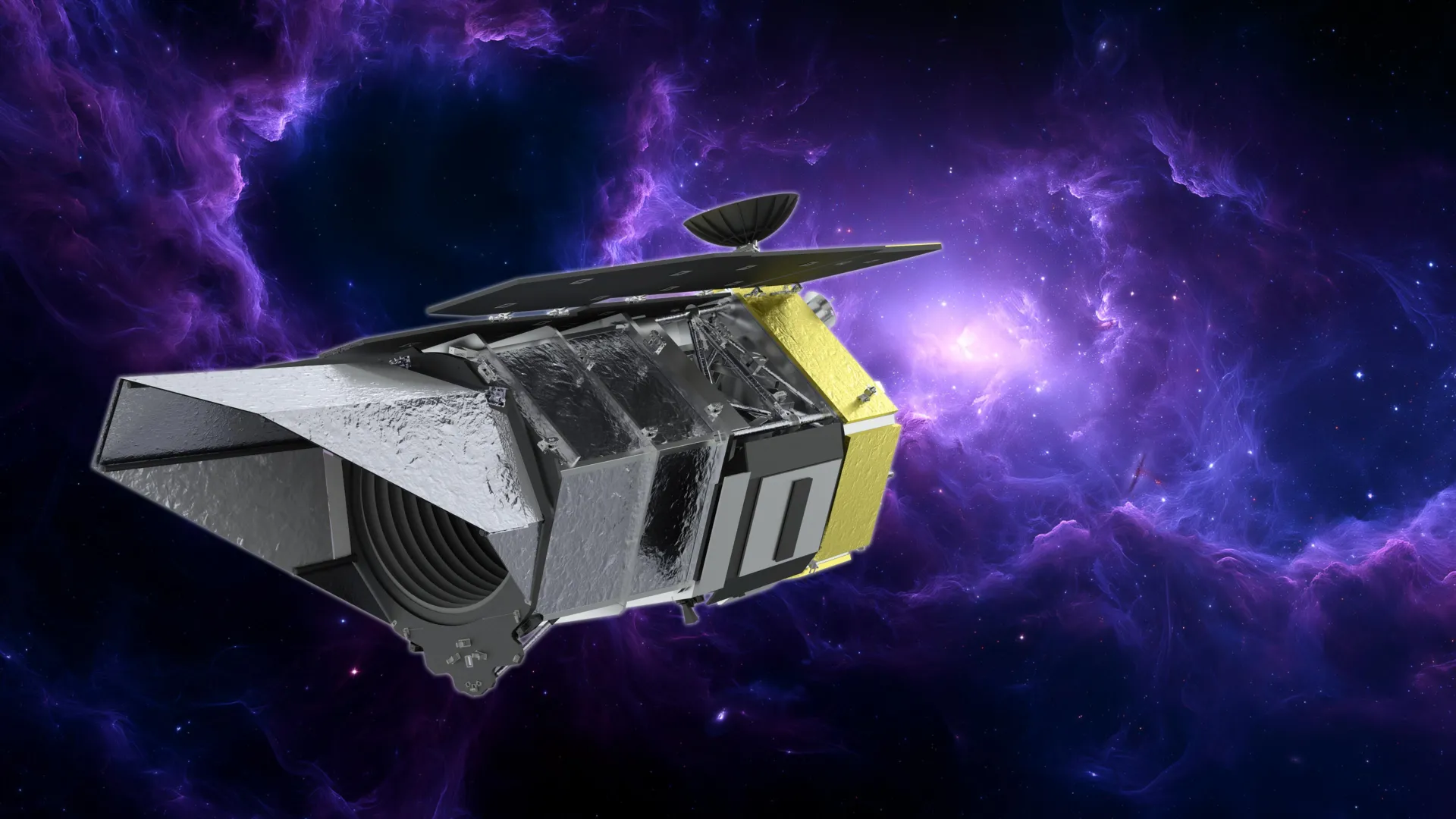
NASA’s new space telescope will uncover a universe we’ve never seen before
The universe is beautiful. On a clear night, stars scattered across the sky can make it feel impossibly vast. But we see only a fraction of what is there; human eyes detect only visible light, a sliver of the electromagnetic spectrum. This leaves much of the universe invisible to us. So, if the night sky we see already looks so incredible, imagine what lies beyond the limits of our human eyes.
NASA’s Nancy Grace Roman Space Telescope is built to push past these limits. Its wide field of view and powerful infrared vision could reveal a universe even more extraordinary than what we can see from Earth.
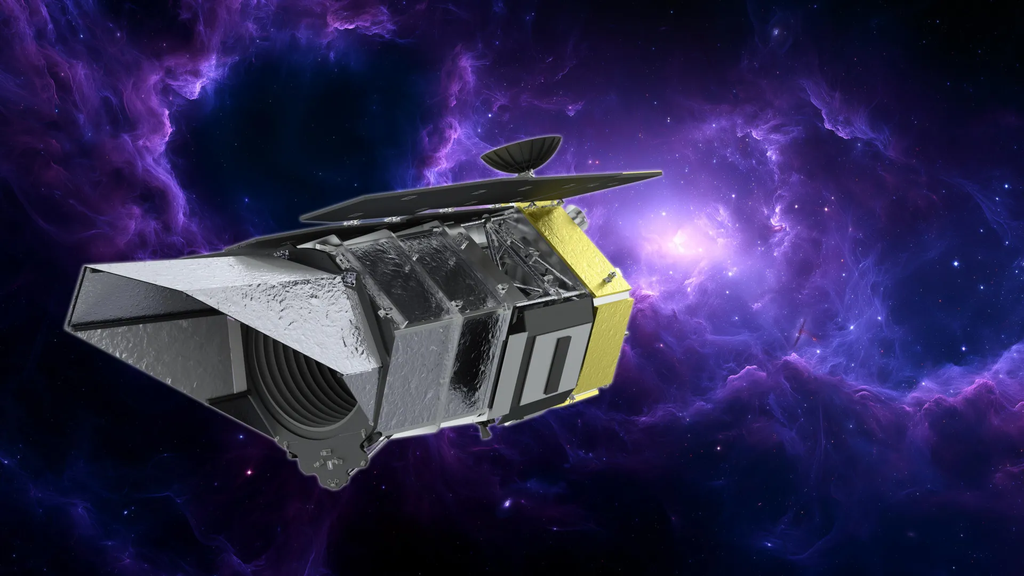
Named after Dr. Nancy Grace Roman, NASA’s first chief of astronomy who laid the foundations for generations of space telescopes, the Nancy Grace Roman Telescope will expand our view of the universe far beyond what our eyes can see (1). It carries the Wide Field Instrument (WFI), a 300-megapixel infrared camera that combines the sharp detail of NASA’s Hubble Space Telescope with a massive field of view 100 times larger than Hubble’s. A single WFI image covers an area of sky larger than the apparent size of the full moon (2)!
Roman is designed to conduct huge surveys of the cosmos and return with nearly 20,000 terabytes of data (3). Its observations could help scientists better understand dark energy, dark matter, and about 100,000 planets outside our solar system, while detecting phenomena such as exploding stars and growing black holes (1, 2, 3). Scientists plan to use these observations to learn how matter is arranged throughout the universe, explore hundreds of millions of galaxies, and uncover unusual cosmic events not previously observed.
Bright stars can easily overwhelm a planet’s faint glow, making them hard to detect. But Roman’s planet-imaging system, called the Coronagraph Instrument, can suppress a star’s overwhelming glare using optics, masks, self-flexing mirrors, and sensors (2). The instrument is expected to do this two to three times better than any coronagraph ever flown to space, revealing the faint light of nearby orbiting planets and delivering the clearest-ever images of distant star formation (4).
The Coronagraph instrument has two flexible mirrors as its key components. When light that has traveled tens of light-years from exoplanets reaches the telescope, thousands of actuators move like pistons, changing the mirrors’ shape in real time. These mirrors flex so precisely that they compensate for tiny errors in the telescope’s optics, smaller than the width of DNA. These deformable mirrors, along with high-tech masks, suppress diffraction from the stars, the bending of light waves around the edges of elements in the Coronagraph.
With this star-dimming technology, known as “active wavefront control”, Roman’s Coronagraph should surpass the capabilities of previous coronagraphs by 100 to 1,000 times (4).
Roman launched in September 2026 and is now heading toward Lagrange point 2 (L2), about a million miles from Earth, where it will join NASA’s James Webb Space Telescope in orbit (1). Located on the side of Earth opposite the Sun, L2 is a region where the Sun’s and Earth’s gravity helps spacecraft stay nearby with relatively little fuel. Spacecraft orbit this point, which provides a stable environment for the Roman to observe the universe while keeping the Sun, Earth, and Moon roughly in the same direction to help shield it from heat and stray light (5). During its journey to L2, Roman is undergoing a months-long commissioning process.
The WFI finally came online after ten days of meticulous preparation, including decontamination, drying, and temperature control. It has now powered up and is functioning as expected, with its calibration system successfully transmitting data to Earth. The Coronagraph has also passed all its early checks, and scientists and engineers have confirmed steady communication with the system. With Roman’s element wheel, a rotating disk in the WFI that tunes light wavelengths, also cleared after testing, Roman gradually opens its eyes to the universe it was built to explore (2).
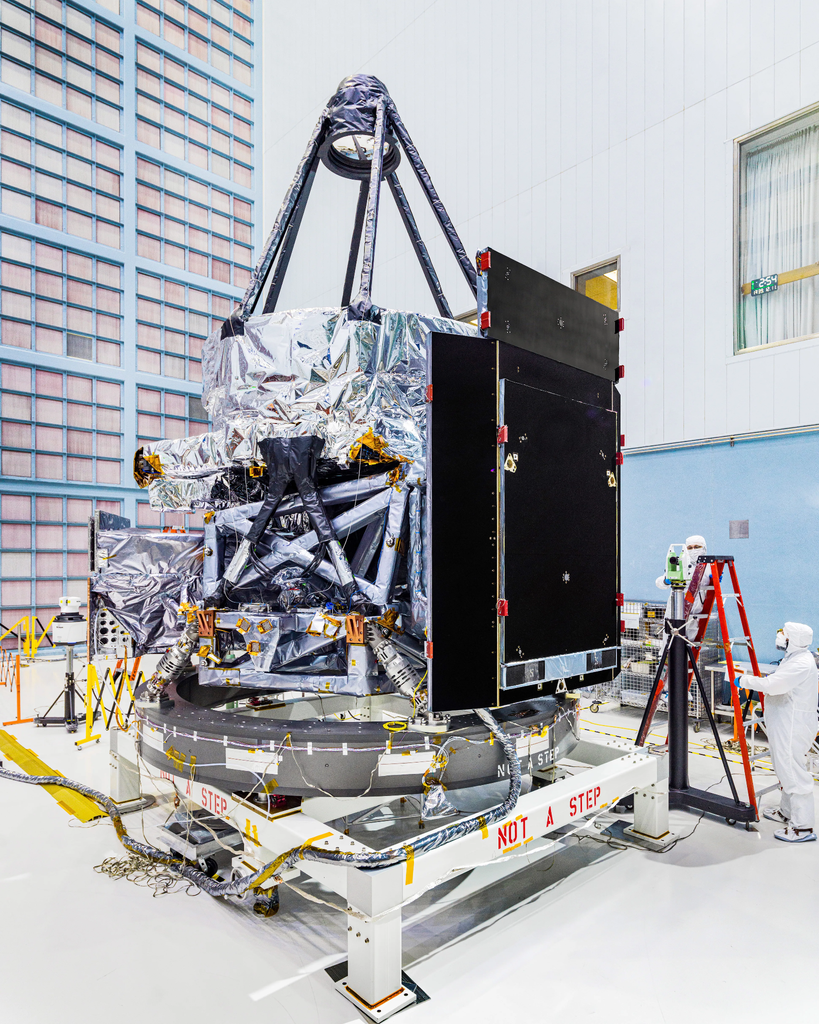
Roman is expected to conduct its science mission for at least 5 years, with fuel as its only limitation. While the telescope is designed to be refuelable, NASA is not yet able to service observatories at L2. After Roman completes a series of deployments and tests in the next three months, NASA hopes to share Roman’s first images by early 2027!
Roman’s observations could help answer some of the universe’s biggest questions, from the nature of dark energy to how galaxies form, but scientists still don’t know exactly what Roman will uncover. Roman’s discoveries won’t belong to scientists alone. More than 1.3 million people’s names are traveling aboard the spacecraft on a memory card (1).
But seeing is only the beginning. An eye can catch light, but the brain turns those signals into something we can understand. Similarly, Roman will gather enormous amounts of data, but scientists will have to interpret what it reveals.
Bibliography:
- Balzer, A. (2026, August 27). 9 Things to Know About NASA’s Nancy Grace Roman Space Telescope. NASA Science. https://science.nasa.gov/missions/roman-space-telescope/9-things-to-know-about-nasas-nancy-grace-roman-space-telescope/
- (2026). NASA just powered up Roman’s massive 300-megapixel camera. ScienceDaily. https://www.sciencedaily.com/releases/2026/09/260921081058.htm
- (2026). NASA’s powerful Roman Space Telescope is about to transform astronomy. ScienceDaily. https://www.sciencedaily.com/releases/2026/05/260518041345.htm
- Brill, J. (2023, October 24). Coronagraph. NASA Science. https://science.nasa.gov/mission/roman-space-telescope/coronagraph/
- Kaiser, C. (2018, March 27). What Is a Lagrange Point?. NASA Science. https://science.nasa.gov/resource/what-is-a-lagrange-point/.
Image Citations:






Comments are closed.