
Exploring endless adaptive and innate strength
Symbolized by a yellow chomping circle, Pac-Man is an arcade game that was released in 1980 by Tōru Iwatani. It quickly became an international sensation—the blueprint for a properly designed icon (1). Our bodies, however, house the original Pac-Mans: macrophages. Every encounter we have with germs or foreign substances is met with the same chomping popularized by a video game. Macrophages are just one type of immune cell we house and produce; differentiating helper and cytotoxic T cells, antibody-producing B cells, and natural killer cells all dwell inside our bodies (2). Their sole purpose? To protect us!
Our immune system has both adaptive and innate immunity, each with its own set of immune cell types. Innate immunity, or the ability to rapidly respond to foreign substances non-specifically, is the body’s first response to a threat. Macrophages, neutrophils, dendritic cells, and natural killer cells are all part of innate immunity (2, 3). They are all the “simpler” types of immune cells that have no immunological memory, or the ability to “remember” a bodily threat, but can respond in a matter of minutes. By contrast, adaptive immunity is highly specific and custom-tailored to threats: it can remember a pathogen and attack it more quickly the next time. For good reason, T cells and B cells are the most well-known and advanced immune cell types. Each cell type starts as a naive, young cell. It is activated when first exposed to an antigen, which cascades the signalling pathway for differentiation into memory cells: housed primarily in bone marrow, waiting for their next attack (3). Essentially, harmful substances train these cells to be stronger and faster!
Scientists at UCLA are researching how to optimize our innate immunity to fight infections better. The general mechanism involves unwrapping tightly wound DNA to expose new genes in the hopes of macrophages producing more antigen-fighting proteins (4). This hinges on demethylating the histones of the DNA, allowing for transcription and translation for protein production.
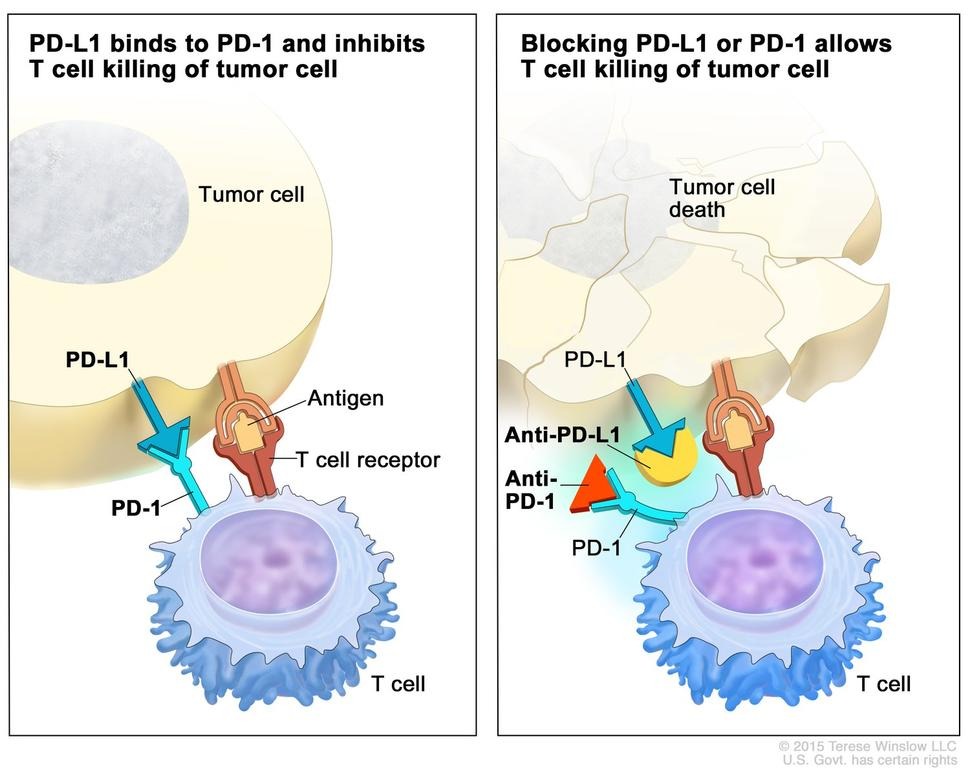
This, of course, requires heavy monitoring to avoid inflammation and autoimmune diseases, which stem from an overactive immune system in which immune cells can mistake bodily tissue for a threat. Additionally, women account for nearly 80% of all autoimmune disease diagnoses due to sharp spikes in estrogen during puberty or pregnancy (5, 6). Our immune systems, however, have great power that can surmount cancer. The current leading treatment for melanoma, a skin cancer, involves training T cells to recognize tumor cells through checkpoint inhibitor proteins: they release the brakes on a “cautious” immune response in hopes that cytotoxic T cells will kill more tumor cells (7).
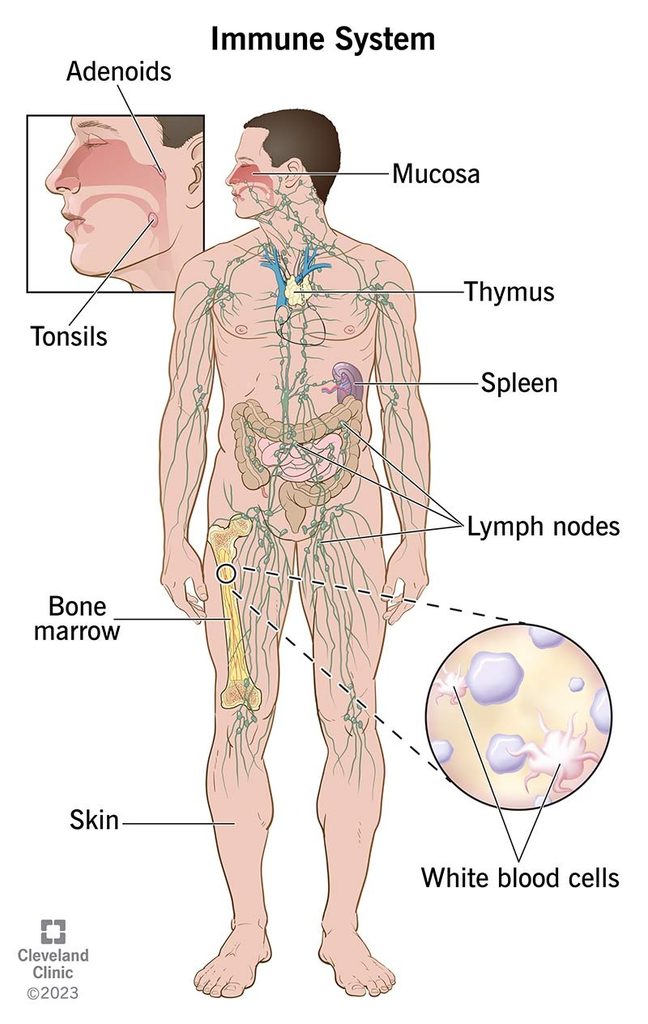
Aside from our brain and our gut, the immune system is another powerful mechanism that protects our body constantly. Feeling sick can be exhausting, but it is evidence of our strength. There is an overwhelming amount of evidence proving this, so much so that cancer research has carved out an entire immunological field dedicated to us! The immune system is simply one of many amazing features of our body: a clump of learning, adapting, and remembering cells.
Bibliography:
- GameFAQs. (n.d.). Pac-Man – Guides and FAQs. Retrieved from: https://gamefaqs.gamespot.com/nes/579617-pac-man/faqs
- Encyclopedia Britannica. (2026). Immune System. Retrieved from: https://www.britannica.com/science/immune-system
- National Institute of Allergy and Infectious Diseases. (n.d.). Immune Cells. Retrieved from: https://www.niaid.nih.gov/research/immune-cells
- Cheng, Quen. (2021). UCLA Study Reveals How Immune Cells Can Be Trained To Fight Infections. UCLA Health. Retrieved from: https://www.uclahealth.org/news/release/ucla-study-reveals-how-immune-cells-can-be-trained-fight
- Desai, M., Brinton, R. (2019). Autoimmune Disease in Women: Endocrine Transition and Risk Across the Lifespan. Frontiers in Endocrinology. Retrieved from: https://pmc.ncbi.nlm.nih.gov/articles/PMC6501433/
- Watson, Stephanie. Wigely, Shanika. Goodwin, Meredith. (2026). Autoimmune Diseases: Symptoms, Causes, Types, & Treatment Guide. Healthline. Retrieved from: https://www.healthline.com/health/autoimmune-disorders
- National Cancer Institute. (2022). Immune Checkpoint Inhibitors. Retrieved from: https://www.cancer.gov/about-cancer/treatment/types/immunotherapy/checkpoint-inhibitors
Image Citations:



Comments are closed.