
This new groundbreaking therapy is helping paralyzed patients all over the world recover
On July 18th, 2020, Keith Thomas dove into a friend’s shallow swimming pool, not knowing what would happen next. Instead of coming up safe, Thomas hit his head on the cement, breaking his neck and causing a spinal cord injury that would paralyze him from the chest down, a condition dubbed quadriplegia. After Thomas spent months alone at the North Shore University hospital at the height of the COVID-19 pandemic, Chad Bouton, a professor at the Feinstein Institutes for Medical Research, presented Thomas with a proposition: to enter a study in which he would receive a double neural bypass surgery, the first of its kind (4). While undergoing double bypass therapy, Thomas was able to regain feeling in his hands, and he was even able to complete everyday tasks like drinking a glass of water independently (1). Over the course of a couple months, a medical study turned into an innovative technology that could, in coming years, help millions of paralyzed people worldwide.
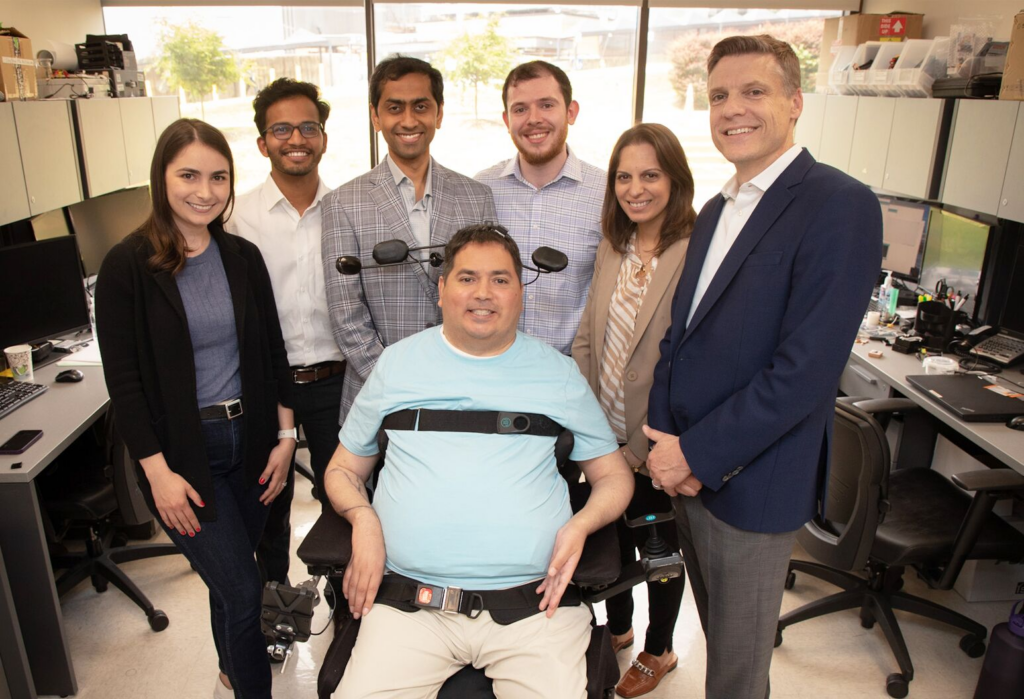
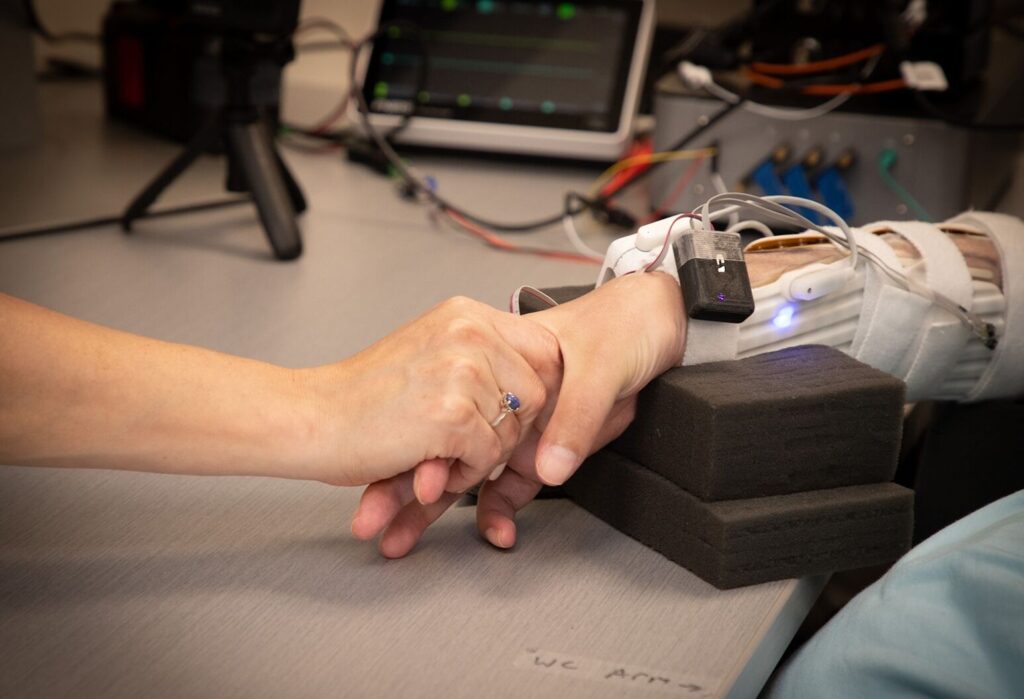
But how does double neural bypass therapy work? The therapy combines AI, brain implants, and electrodes placed over the muscles and neck in order to reconnect neural circuits and allow movement in previously paralyzed parts of the body (1). When Thomas got treated, he first underwent a 15-hour open brain surgery, during which researchers placed five chips in parts of Thomas’ brain that controlled movement (4). Afterwards, Thomas went into the Feinstein Institutes on Tuesdays and Thursdays, spending several hours in the lab each session (1). The chips form two circuits: one picks up signals coming from various areas of the brain that control movement, and the other carries signals to parts of the brain that process pressure and touch . In addition to these two different sets of embedded chips, another branch of chips actively connects the brain to the spinal cord; Thomas’ spinal cord is stimulated when he thinks about moving. By prompting the spinal cord and muscles simultaneously, both are strengthened, nourishing healthy neural connections between the brain and limbs (3).
Though Thomas was nervous about undergoing such a novel and possibly unsafe procedure, he announced post surgery that “if this can help someone even more than it’s helped me somewhere down the line, it’s all worth it” (4). Thanks to resilient patients like Thomas and brilliant scientists like Chad Bouton, the chief innovator of the double neural bypass, millions of paralyzed patients worldwide could see their life transform before their eyes as they regain feeling in their limbs.
Bibliography:
- Bouton, C. (2023, September 11). Developing the first ‘double neural bypass’ to restore lasting movement, sensation in paralysis, Feinstein Institutes for Medical Research. https://feinstein.northwell.edu/news/insights/developing-double-neural-bypass-restore-lasting-movement-sensation-paralysis
- Fauzia, M. (2023, October 30). Personalized Deep Brain Stimulation Device May Offer Relief for Severe OCD, Inverse. https://www.inverse.com/health/deep-brain-stimulation-ocd-treatment#:~:text=But%20a%20new%20emerging%20treatment,in%20the%20study%2C%20tells%20Inverse.
- Hamilton, J. (2025, March 10). Scientists are engineering a sense of touch for people who are paralyzed, NPR. https://www.npr.org/2025/03/10/nx-s1-5313452/brain-bypass
- Wright, I. (2023, August 1). Diving accident left man paralyzed. Now ‘historic’ treatment gives him second chance, Miami Herald. https://www.miamiherald.com/news/nation-world/national/article277847058.html
Images:


Comments are closed.