
How a deliberate oil spill caused lasting damage to the marine life surrounding it
Imagine looking out at an ocean where the water is no longer blue but black. In 1991, during the Gulf War, more than 200 million gallons of oil were deliberately spilled into the ocean, making it the largest oil spill in human history (1).
As its name suggests, the spill happened as a result of the Gulf War which was fought by Iraq, under Saddam Hussein, and the US-led coalition. The war started in 1990 when US-led forces invaded Iraqi forces in Kuwait and ended in 1991 when the UN and Iraq agreed to a peace deal that involved Kuwait’s sovereignty and Iraq losing its capacity for destructive weaponry (2). The spill occurred near the Persian Gulf, an area full of marine flora and fauna. Additionally, the economy of the surrounding area relied on fishing and the surrounding ecosystem.
So how did the spill occur? Nearing the end of the war,in January of 1991, Iraq began purposefully spilling oil into the Gulf in a Hail Mary attempt to deter a potential U.S. invasion by sea. Though their exact intentions are not entirely known, it is suspected that Iraq intended to make it harder for coalition forces to access oil reserves, as well as damage important coalition water supplies in Saudi Arabia (3). In total, nearly 200 million gallons of oil covered an area of around 4,200 square miles and reached a maximum depth of around 5 inches, making it one of, if not the largest, oil spills in history (3).
To address this problem, the coalition had to do a couple of things: stop Iraqi oil refineries from actively leaking, and second, clean up the damage already done. First, to ensure the spill didn’t worsen, the U.S. bombed many important Iraqi oil pipelines, effectively halting production and further leakage of oil and preventing additional oil from reaching the ocean (4). Next, efforts focused on cleanup. Sadly, due to its massive size, there was no effective mechanical method for removing all 4,200 square miles of oil on coastlines, near desalination plants, and near fisheries. Booms, skimmers, and chemical dispersants were used to mechanically remove the oil. These cleanup methods, however, only cleaned up a small fraction of the oil, leaving the rest to the last method—time. Eventually, some of the lighter oils evaporated, and almost all of the oil dissolved or dispersed, creating very little visible oil (5).
The environmental consequences of the Gulf War oil spill were immediate and harmful, especially to marine life and coastal wildlife. When oil spreads across the water’s surface, it blocks sunlight access, making it much harder for the plants to survive. Along with this, the oil blocks oxygen access for the water, which makes it extremely difficult for marine organisms to survive (6). As a result, widespread mortality among fish, plants, and invertebrates disrupted food chains and affected higher-level consumers such as birds and mammals that relied on the marine ecosystem.
Seabirds were one of the most affected animals. Oil coated their feathers and wings, limiting their ability to fly off the water, worsening their natural insulation and waterproofing, and making it much harder to access the fish they relied on. As a result, many seabirds drowned, starved, or froze to death (7). Other marine animals, including birds and turtles, were also poisoned from either direct contact with the oil or by consuming contaminated prey.
Another greatly impacted ecosystem was coastal habitats. Mangrove forests, which help protect shorelines and shelter smaller species of fish, were covered in oil that became trapped in their root systems. Coral reefs and mudflats were similarly damaged as oil settled into their sediments and stayed there long after the surface slick was almost entirely gone. Even decades later, studies show that the remaining oil residue continues to impact marine ecosystems; although some recovery occurred over time, the spill caused long lasting, and in some cases permanent, environmental damage (7).
Bibliography
1. to, C. (2005, February 20). large oil spill resulting from the Gulf War in 1991. Wikipedia.org; Wikimedia Foundation, Inc. https://en.wikipedia.org/wiki/Gulf_War_oil_spill
2. Affected Gulf Resources | Gulf Spill Restoration. (2026). Noaa.gov. https://www.gulfspillrestoration.noaa.gov/affected-gulf-resources
3. Hassanshahian, M., Amirinejad, N., & Askarinejad Behzadi, M. (2020). Crude oil pollution and biodegradation at the Persian Gulf: A comprehensive and review study. Journal of Environmental Health Science and Engineering, 18(2), 1415–1435. https://doi.org/10.1007/s40201-020-00557-x
4. Linden, O., Jerneloev, A., & Egerup, J. (2004). The Environmental Impacts of the Gulf War 1991. Iiasa.ac.at. https://pure.iiasa.ac.at/id/eprint/7427/1/IR-04-019.pdf
5. Bejarano, A. C., & Michel, J. (2010). Large-scale risk assessment of polycyclic aromatic hydrocarbons in shoreline sediments from Saudi Arabia: Environmental legacy after twelve years of the Gulf war oil spill. Environmental Pollution, 158(5), 1561–1569. https://doi.org/10.1016/j.envpol.2009.12.019
6. The Catastrophic Damages from Oil Spills. (2020, September 14). The Ocean Foundation. https://oceanfdn.org/the-catastrophic-damages-from-oil-spills/
7. Colorado Journal of International Environmental Law and Policy, International Environmental Implications of the Persian Gulf War, 2 COLO. ENV’T L. J. 343 (1991). Available at: https://scholar.law.colorado.edu/celj/vol2/iss2/13
Images:
- https://daily.jstor.org/the-gulf-oil-spill-5-years-later
- https://www.bbc.com/future/article/20231002-the-photo-of-the-deepwater-horizon-bird-that-shocked-the-world
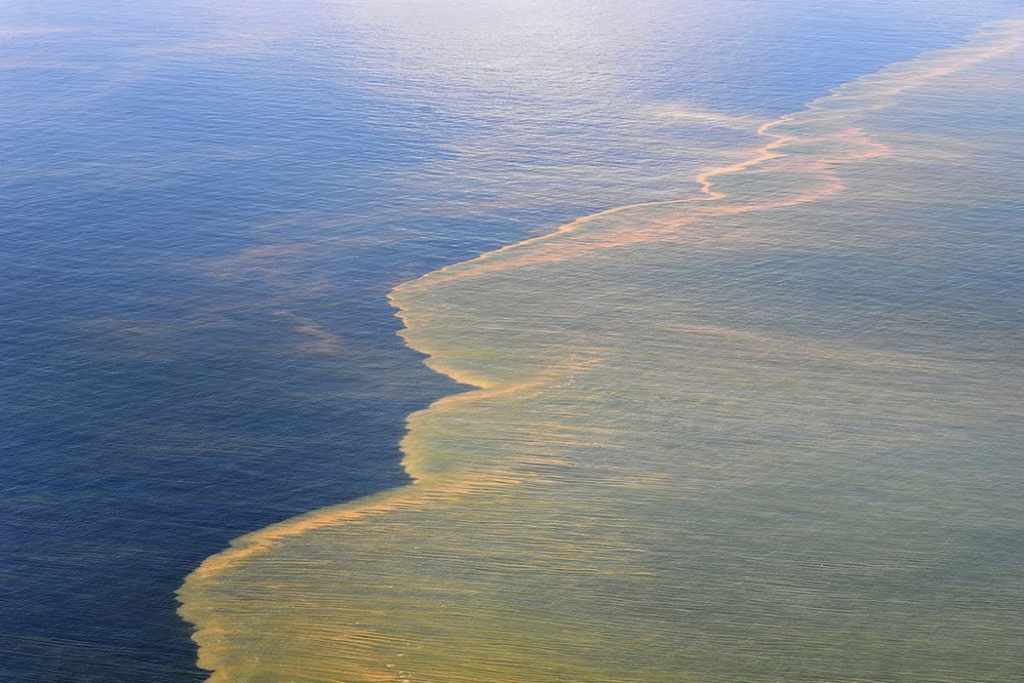
The 1991 Gulf War Oil Spill.
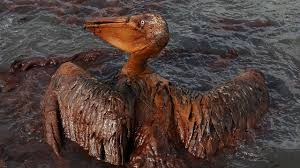
Bird Covered in Oil From the Spill.




Comments are closed.