
How beer is being used to create a new vaccine
This past summer, I had the pleasure of traveling to Lithuania. Known for their beetroot soup and textured boiled potato dumplings, I ate Lithuanian food nearly three meals a day for over a week. While I enjoyed this newfound cuisine, my dad and brother often paired their sardines and boiled potatoes with Lithuanian beer, a staple in everyday meals. That same tradition of farmhouse brewing showcases the science behind virologist Chris Buck’s work: the familiar processes that turn grain into beer also provide a method for delivering biological material. What began as a casual dining experience during my summer travels became a story that combines science and ethical responsibility, as it was through this Lithuanian-style farmhouse ale that Buck claims to have developed the world’s first beer vaccine (1).
The home-brew is an intestinal polyomavirus vaccine said to protect against polyomavirus, a family of viruses that infect over 90 percent of people by age nine (4). These non-enveloped viruses have circular double stranded DNA genomes. BK and JC polyomavirus, discovered in 1971, were the first human-tropic polyomaviruses (viruses that have evolved to primarily infect humans) (7). In most patients, the virus causes no symptoms and remains dormant and harmless. However, in immunocompromised patients, the virus can reactivate, which leads to kidney damage, painful bladder inflammation, and complications for transplant recipients (4).
The vaccine is administered through beer using engineered yeast. Buck modified the yeast to express the polyomavirus virus’s major capsid protein (VP1). This protein self-assembles into empty virus-like particles (VLPs) that resemble the virus but cannot cause infection (2). In vaccines, these particles act as antigens, which are substances that train the immune system to recognize a pathogen without exposure to the disease itself. When the engineered yeast is used to ferment beer, the antigens remain suspended in the liquid (1). According to Buck, drinking the beer delivers live yeast carrying VP1 particles to the gut, where the immune system identifies the antigen and produces antibodies to neutralize the virus when the body does encounter it (3).
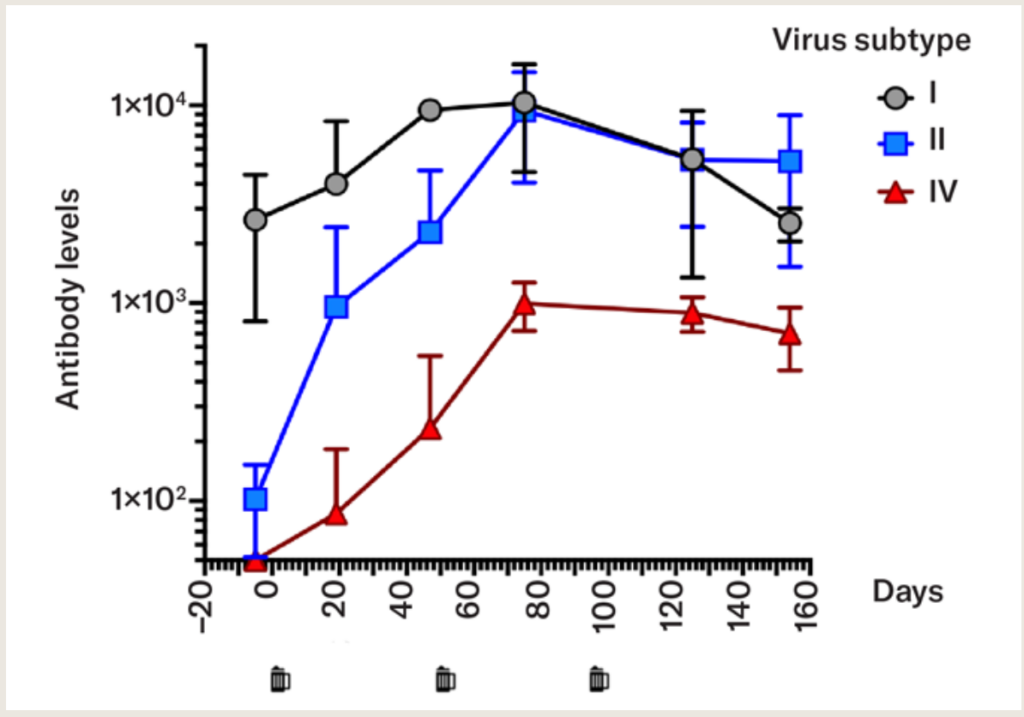
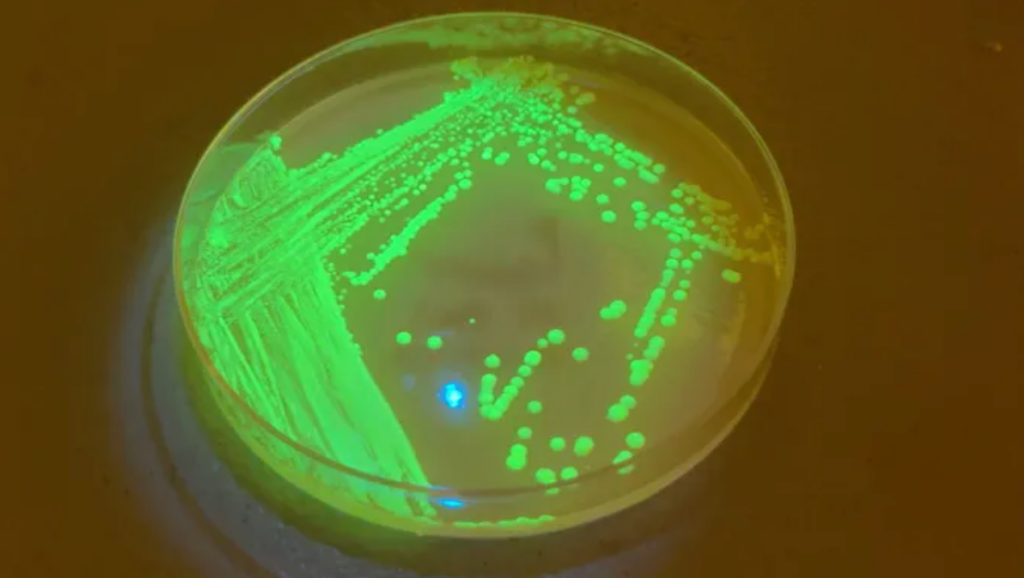
The green-glowing yeast depicted in the image is a culture dish in Buck’s dining room. The fluorescent green color indicates that the yeast carries DNA instructions for making the virus-like particles (5). Buck drank two pints of his home brew daily for four days and then conducted a follow-up blood sample to test for the types of antibodies that fight BK polyomavirus (3). He compared antibody levels to three BK subtypes before and after drinking the beer. While antibodies to subtype one remained stable, levels for subtypes two and four increased after the initial and subsequent doses (indicated in the graph shown by the beer icons). On December 17, 2025, he posted these results to Zenodo, an open-access online research repository where researchers can share their findings for free (5).
Buck recalls transplant surgeons who “practically shook him by the shoulders to demand polyomavirus vaccines” (5). He initially went through formal research protocols but was denied by ethics committees and decided to conduct the research independently, bypassing many of the safeguards that are required in biomedical research (4). He created his own website, “Gusteau Research Corporation,” to showcase his findings. Buck references Chef Gusteau from the movie Ratatouille, quoting, “Great cooking is not for the faint of heart. You must be imaginactive! You must try things that may not work. You must not let anyone define your limits because of where you come from.” He says this quote reflects his scientific approach (6). He also argues that oral vaccines already exist for diseases like polio and cholera, which demonstrates that vaccines don’t always require injections (4).
Despite Buck’s innovative spirit, there are several legal, ethical and moral challenges associated with his research. Dr. Arthur Caplin, former head of medical ethics at NYU’s medical school, argues that while new vaccine delivery methods are necessary, Buck’s homebrew experiment could undermine actual peer reviewed lab science, as public trust is central to whether vaccines are accepted or used (5).
As vaccine hesitancy continues to rise and childhood vaccination rates decline in the United States, informal at-home experiments and the bypassing of research protocols risk reinforcing public skepticism (8). While Buck’s beer vaccine is a creative attempt to address an unmet medical need, his unconventional research techniques blur the line between science and fiction. Vaccines’ success is dependent on not only science but also on public perception.
Scientists rely on transparency, peer review, and established protocols to maintain credibility. For Buck’s vaccine to benefit patients, it would need to undergo years of clinical trial and rigorous testing. Without these steps, the vaccine could be perceived as unsafe and further contribute to vaccine hesitancy. Still, Buck’s work highlights the barriers that can delay lifesaving science and underscores the intersection between science, ethics, and public perception.
Sources
- Will Pavia. (2026, January 2). Scientist who homebrewed a beer vaccine: ‘It gave me immunity to virus’. The Times https://www.thetimes.com/us/news-today/article/beer-vaccine-homebrew-science-66bljr2jl?gaa_at=eafs&gaa_n=AWEtsqcOhzwokxES5VMAF0Azt6wALsqDc2X-VmycWyjQUPP-c6o4ScV7QmNP&gaa_ts=696cf9fa&gaa_sig=kJ-9suG-zpxh-kPT-tZKlP50TG4iJPr1nZhYr9st3vVw9LO2insi_LYWi1JxPYEQeq4OftZdqpuK771rDR7RLQ%3D%3D
- Addgene. (n.d.). Expressing polyomavirus capsid protein in yeast. https://www.addgene.org/browse/article/28259296/
- NYU Langone Health. (2025, December 26). NYU Langone Health in the news — Friday, December 26, 2025. https://nyulangone.org/news/nyu-langone-health-news-friday-december-26-2025
- Promega Connections. (n.d.). The vaccine beer experiment. https://www.promegaconnections.com/the-vaccine-beer-experiment/
- Science News. (n.d.). Vaccine beer: A polyomavirus experiment with engineered yeast. https://www.sciencenews.org/article/vaccine-beer-polyomavirus-chris-buck
- Gusteau Research Corporation. (n.d.). GusteauCorp.org. https://gusteaucorp.org/
- Schowalter, R., et al. (2017). Polyomaviruses: BK and JC viruses. In Fields Virology (7th ed.). National Center for Biotechnology Information. https://www.ncbi.nlm.nih.gov/books/NBK294248/
- International Vaccine Access Center. (2025, August 20). Across the U.S., childhood vaccination rates continue to decline. Johns Hopkins Bloomberg School of Public Health. https://publichealth.jhu.edu/ivac/2025/across-the-us-childhood-vaccination-rates-continue-to-decline
Images




Comments are closed.