
Who was Nettie Stevens, and how did her discoveries drive biological research?
For millions of years, people believed that external factors and placebo effects determined biological sexes. In ancient Greece, women would drink white wine and eat lettuce to give birth to a girl, and in 15th-century Italy, women were instructed to consume warm foods and avoid sitting on cold ground to give birth to a boy. It was not until the early 20th century that the idea that sex was rooted in genetics was proposed, and this began with a woman never credited or acknowledged by the public for her work: Nettie Maria Stevens (1).
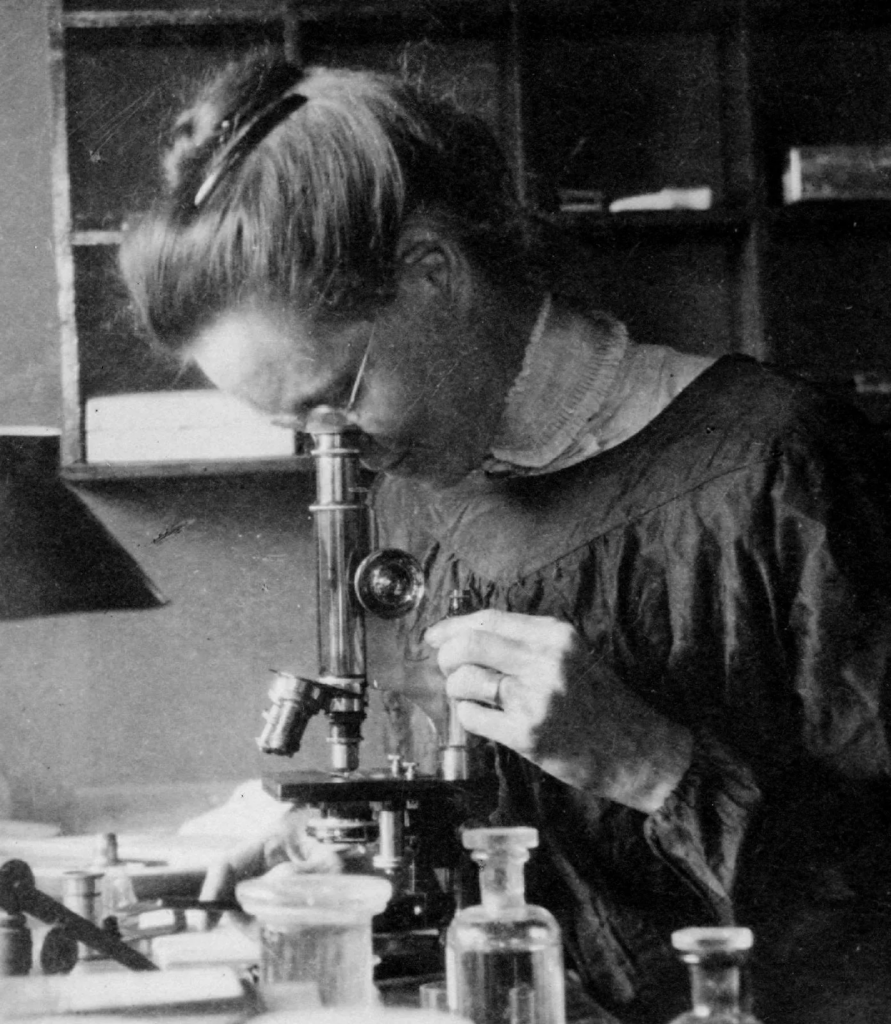
Stevens (1861-1912) was one of the first scientists to discover that chromosomes determined biological sex. She earned a bachelor’s and master’s degree at Stanford University in 1900 and began her doctoral studies in Italy and Germany. Stevens published her first paper in 1901 on morphology, the study of the forms of living organisms, and cytology, the study of functions and structures of plant and animal cells (2). Her paper centered around observations of the life cycles of ciliate protozoa, single-celled animals (3). She continued her education at Bryn Mawr College, beginning her doctorate under the guidance of Thomas Hunt Morgan and earning a Ph.D. in 1903 (2). In 1904, she worked with Morgan to write a paper together on regeneration and cytology, the study of a single cell. This later led Morgan to receive the Nobel Prize in 1933, taking credit for some of Stevens’ work (1, 4).
Stevens continued her studies in cell regeneration as a postdoctoral research assistant at the Carnegie Institute of Washington in 1905 (1). Her investigations of embryo development and the functions of chromosomes made her among the first scientists to provide concrete evidence for how X and Y chromosomes determine an individual’s sex (3). Through her experiments on the yellow mealworm, Stevens discovered that male mealworms produced sperm with either a large chromosome (X) or a small chromosome (Y). Conversely, female mealworms produced eggs with only large chromosomes (2). She therefore concluded that chromosomes determined the sex of offspring, ending the debate of whether sex was inherited or caused by environmental factors at the time the embryo was being formed (3).
Stevens’ discovery of sex-determining chromosomes is often falsely attributed to Edmund Beecher Wilson, a former professor at Bryn Mawr who was heavily involved in her work (2). Both Stevens’ and Wilson’s research on sex chromosomes was published in the same year, 1905, but due to the gender bias at the time, Stevens’ work gained recognition much more slowly, leading to scientists often crediting Wilson alone for the discovery (3). To further emphasize the gender gaps in the scientific field, Wilson and Morgan were invited to speak on their theories of sex determination at a conference in 1906, and not Stevens, even though she conducted the majority of the research (2).
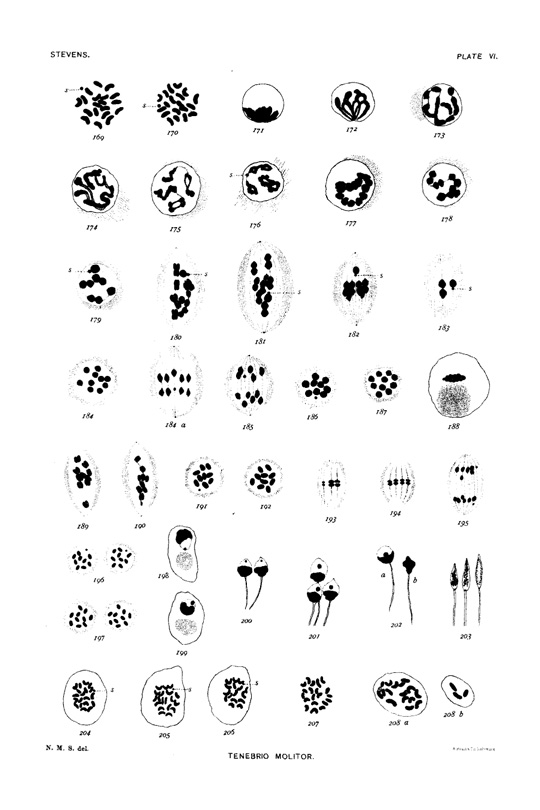
Despite being sidelined in the scientific field for being a woman, Stevens’ depth of knowledge was unparalleled. In 1910, she was included in the top 1000 “men of science” as one of the eighteen women recognized, and published 38 manuscripts in her 11-year career. Additionally, she may have been the first to discover B chromosomes, which are found in all sexually producing mammals and possibly suggest a connection to sex chromosomes (2).
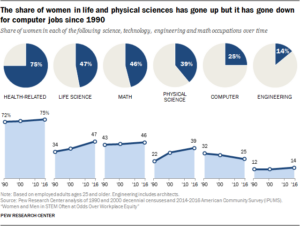
The groundbreaking discoveries of Nettie Stevens remain fundamental for modern biological and hereditary advancements; however, what is equally valuable is how she has inspired women pursuing STEM fields today by proving that passions and capabilities are not confined by gender or societal constraints.
Bibliography:
- Nettie Stevens. (2025). National Women’s History Museum. https://www.womenshistory.org/education-resources/biographies/nettie-stevens
- The Editors of Encyclopædia Britannica. (2020). Nettie Stevens | American biologist and geneticist | Britannica. In Encyclopædia Britannica. https://www.britannica.com/biography/Nettie-Stevens
- Zavialov, A. (2024, August 15). Nettie Stevens: Discovering Sex Chromosomes. Her Stem Space. https://herstemspace.org/2024/08/15/nettie-stevens-discovering-sex-chromosomes/
- Cleveland Clinic. (2021, August 17). Cytology (Cytopathology): What It Is & Types. Cleveland Clinic. https://my.clevelandclinic.org/health/diagnostics/21714-cytology
Images:


Comments are closed.