
Understanding what causes the pay gap in STEM fields
There is often speculation on the severity of the gender pay gap, especially in STEM jobs. While many STEM careers are among the highest-paying professions, those benefits are not equal between genders. Women in STEM fields are consistently earning less than men, even with a similar education, experience, and position (1).
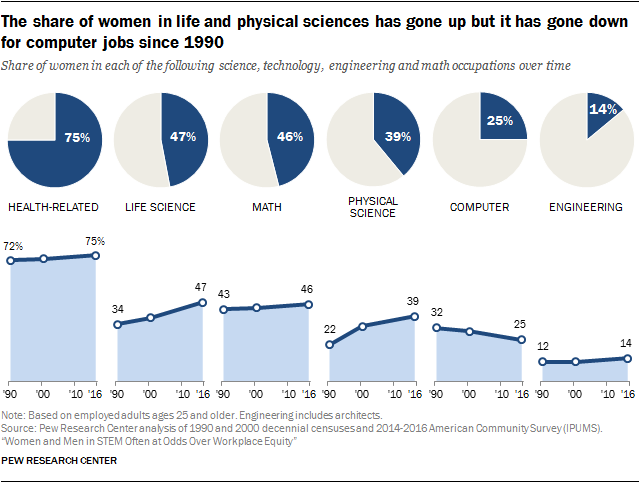
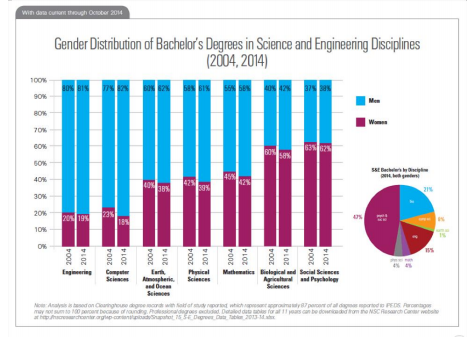
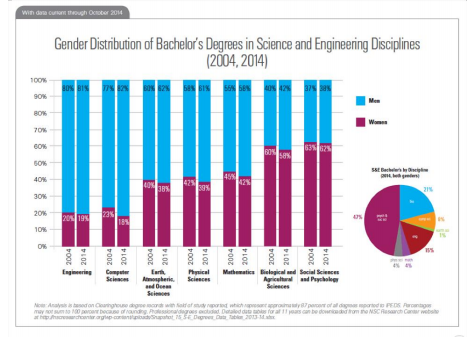
A major factor that contributes to the gender pay gap in STEM is job sorting. In STEM facilities, women are far more likely to work in lower-paying roles. For example, women are more represented in fields such as biology or environmental science. These jobs tend to offer lower salaries in comparison to more male-dominated fields, for example, engineering or computer science (2). This uneven job distribution is a significant contributor to the overall pay gap.
Another factor is workplace bias. Women are less likely to be promoted to higher-paying leadership positions within these industries. Even when women perform at the same level as men, they may be overlooked for raises or advancement opportunities, thus creating long-term financial disparities that grow over time.
Additionally, there is a large lack of representation and mentorship for women in STEM. Because these fields have a significant male population, there are often fewer role models and support systems for women (5). Due to this lack of support, career progression, networking opportunities, and overall confidence are impacted. Without this strong form of female mentorship, more women struggle to navigate workplace challenges.
The gender pay gap also has a large influence from societal expectations. Women are still more likely to take on more domestic responsibilities and caregiving responsibilities, leading to career interruptions or reduced working hours. Many employers also unfairly assume that women are far less committed to their careers, which affects hiring decisions as well as salary. These assumptions often reinforce inequality, limiting a woman’s earning potential in STEM fields in the process (6).
The gender pay gap in STEM is an extremely complex issue shaped by occupational differences, workplace bias, lack of representation, and social expectations. These factors work together to make a system where women are constantly at a disadvantage. Even with equal qualifications and experience, the pay gap reflects common patterns within the workplace and society, affecting how women are valued. Over time, these inequalities tend to build, leading to differences in earnings and career advancement. The gender pay gap in STEM occupations highlights how inequality can persist even in fields that are commonly seen as both fair and merit-based.
Bibliography:
- Binns, C. (2021, February 19). What’s behind the pay gap in STEM jobs? Stanford Graduate School of Business. https://www.gsb.stanford.edu/insights/whats-behind-pay-gap-stem-jobs
- Women In Stem Network. (2025, December 6). Women in STEM statistics 2025: Global and regional trends. https://womeninstemnetwork.com/women-stem-statistics-2025/
- Cohen, S. (2025, December 7). Women in STEM leadership: Breaking barriers and building new paths. https://womeninstemnetwork.com/women-in-stem-leadership-breaking-barriers-and-building-new-paths/
- Schieder, J., & Gould, E. (2016, July 20). “Women’s work” and the gender pay gap. Economic Policy Institute. https://www.epi.org/publication/womens-work-and-the-gender-pay-gap-how-discrimination-societal-norms-and-other-forces-affect-womens-occupational-choices-and-their-pay/
Images:





Comments are closed.