
How drugs seize the brain’s chemical receptors and cause addiction
In 2024, 16.8% of Americans aged 12 or older battled a substance abuse disorder (1). Then, in 2025, there were 71,542 reported drug overdose deaths in the US, 76% related to opioid misuse (2,3). Drug use and addiction have become prevalent problems throughout America. Victims of substance abuse disorders are often characterized as lazy, crazy, and at fault for their illness; in reality, addiction is rooted in the evolution of the human brain.
Situated in the cerebral hemispheres near the brain’s center, a cluster of nuclei called the basal ganglia controls motor function, emotional reward, and cognition (4). Dopamine is a hormone that encourages a broad variety of animals—from flatworms to humans—to move, eat, and reproduce. For over billions of years, it has continued to drive the evolution of millions of species (5). Forebrain dopamine originates from midbrain dopamine neurons in the substantia nigra, a significant part of the basal ganglia; dopamine signaling depends on the rate and pattern of firing of these neurons (6). Humans have a baseline dopamine level to regulate their movement and mood. When humans eat a food they enjoy, they experience a dopamine surge of about 50% more than the baseline; when they engage in sex, there is a dopamine increase of 100%. In contrast, synthetic drugs trigger significantly larger dopamine surges than natural causes: nicotine increases dopamine by 150%, and amphetamines increase the level by 1000%, as well as altering norepinephrine and serotonin levels, which regulate energy, focus, and mood (7).
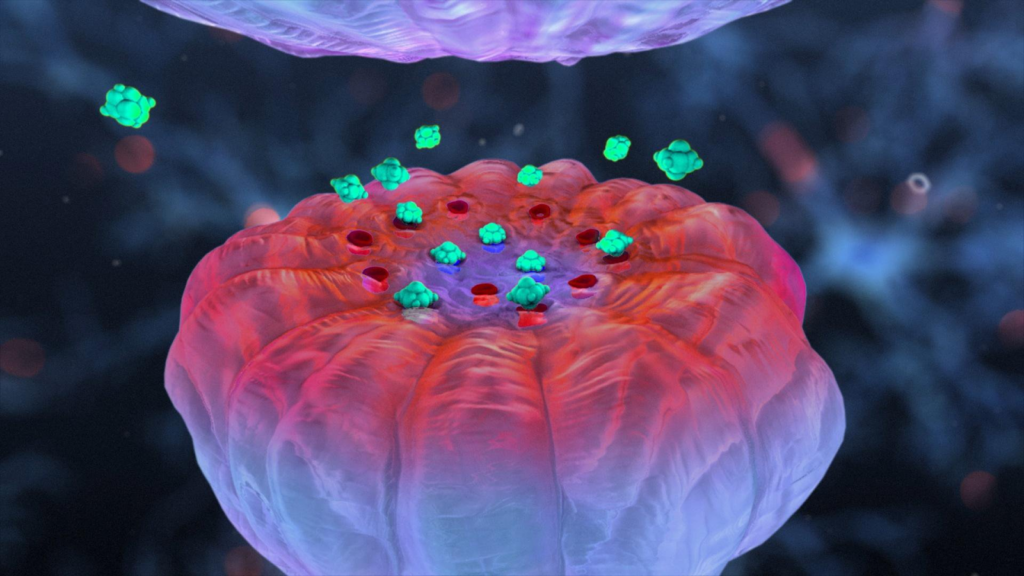
In the healthy human brain, neurotransmitters—such as norepinephrine and serotonin—engage with dopamine receptors and signal the feeling of euphoria characterized by receptor activity. The neurotransmitters only engage with the receptors temporarily, before a transporter carries them away to be recycled. When stimulants, such as cocaine, are introduced into the brain, they mimic the neurotransmitters and are picked up by the transporter proteins. The neurotransmitters then linger in the brain for an extended period of time, stimulating the receptor molecules and producing prolonged feelings of euphoria and happiness associated with being ‘high’ (8). Similarly, when synthetic opioids are introduced to the brain, they mimic the structure of naturally occurring opioid peptides such as endorphins and enkephalins, engaging with opioid receptors for extended periods of time (9).
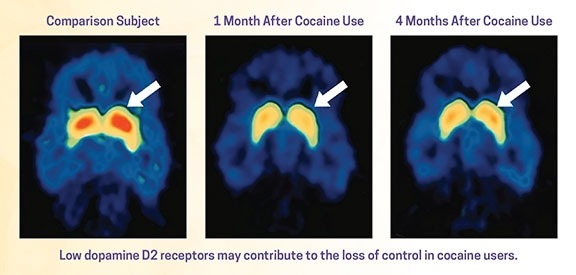
To compensate for the enormous rush of dopamine, or the perceived rush of endorphins and enkephalins, the brain reduces the number and sensitivity of the respective receptors. This results in the ‘low’ feelings of withdrawal, including depression, loss of appetite, and physical pain. As a person uses an addictive substance more and more, the number and power of their receptors decrease, and the brain requires a higher concentration of the addictive chemical to regulate the reception of neurotransmitters (10). Often, people with substance abuse disorders raise their dosage, hoping to compensate for the missing neurotransmitters.
In the case of stimulants, there is already a high concentration of dopamine, serotonin, and norepinephrine in the brain that does not get recycled because of the presence of a stimulant. These high levels of neurotransmitters can cause violent behavior, psychosis, or dramatically elevated heart and breath rates, often to the point of death (11). In the case of depressants like opioids, the body stops being able to produce natural opioid peptides, causing a new reliance on exogenous, or synthetic opioids (12). Enkephalins stimulate the central and peripheral nervous systems. When synthetic opioid levels are too high, there are no enkephalins to engage with the nervous system, shutting down the central nervous system and causing damage to the brain and spinal cord, including coma or brain death (13).
As drug abuse becomes a more pressing problem in America, it is especially important to understand how addiction works. By understanding the function of drugs in the brain, we can then understand how to prevent addiction, create medical treatments to manage addiction, and eliminate stigma towards drug users.
Sources:
- Alcohol and Drug Abuse Statistics (Facts About Addiction). (2025, December 16). American Addiction Centers. https://americanaddictioncenters.org/rehab-guide/addiction-statistics-demographics.
- CDC. (2026, March 13). Data Resources. Overdose Prevention. https://www.cdc.gov/overdose-prevention/data-research/facts-stats/index.html#cdc_listing_res2-sudors-fatal-overdose-data.
- Drug Overdose Death Statistics [2025]: Opioids, Fentanyl & More. (2025, October 3). NCDAS. https://drugabusestatistics.org/drug-overdose-deaths/.
- CB Reddy, Y. (2023, July 24). Neuroanatomy, Basal Ganglia. https://pubmed.ncbi.nlm.nih.gov/30725826/.
- Barron, A. B., Søvik, E., & Cornish, J. L. (2010). The Roles of Dopamine and Related Compounds in Reward-Seeking Behavior Across Animal Phyla. Frontiers in Behavioral Neuroscience, 4. https://doi.org/10.3389/fnbeh.2010.00163.
- Rice, M. E., Patel, J. C., & Cragg, S. J. (2011). Dopamine release in the basal ganglia. Neuroscience, 198, 112–137. https://doi.org/10.1016/j.neuroscience.2011.08.066.
- In “Dopamine Nation,” Overabundance Keeps Us Craving More. (2021, August 25). NPR. https://www.npr.org/sections/health-shots/2021/08/25/1030930259/in-dopamine-nation-overabundance-keeps-u-s-craving-more.
- Racines, Amy. (2024, March 18). Drug Classes and Neurotransmitters: Amphetamine, Cocaine, and Hallucinogens – USDTL. United States Drug Testing Laboratories. https://www.usdtl.com/blog/drug-classes-and-neurotransmitters-amphetamine-cocaine-and-hallucinogens.
- Koob, G. F. (2019). Neurobiology of Opioid Addiction: Opponent Process, Hyperkatifeia, and Negative Reinforcement. Biological Psychiatry, 87(1). https://doi.org/10.1016/j.biopsych.2019.05.023.
- How an Addicted Brain Works. (2022). Yale Medicine. https://www.yalemedicine.org/news/how-an-addicted-brain-works.
- Hughto, J. M. W., Kelly, P. J. A., Vento, S. A., Pletta, D. R., Noh, M., Silcox, J., Rich, J. D., & Green, T. C. (2025). Characterizing and responding to stimulant overdoses: Findings from a mixed methods study of people who use cocaine and other stimulants in New England. Drug and Alcohol Dependence, 266, 112501. https://doi.org/10.1016/j.drugalcdep.2024.112501.
- Henry, M. S., Gendron, L., Tremblay, M.-E., & Drolet, G. (2017). Enkephalins: Endogenous Analgesics with an Emerging Role in Stress Resilience. Neural Plasticity, 2017, 1–11. https://doi.org/10.1155/2017/1546125.
- Naval, N., Chandolu, S., & Mirski, M. (2011). Organ Failure: Central Nervous System. Seminars in Respiratory and Critical Care Medicine, 32(05), 587–597. https://doi.org/10.1055/s-0031-1287867.
Images:




Comments are closed.