
The hidden figure behind what we know about the Earth’s shape
Many of us use the GPS to get to school every day, but very few know the woman who invented it. Gladys West grew up on a small farm in Sutherland, Virginia, towards the end of the Great Depression, when segregation was still present (1). She graduated as the valedictorian of her class, earning her a scholarship to Virginia State College (now known as University). There, she earned her Bachelor’s degree in mathematics (2).
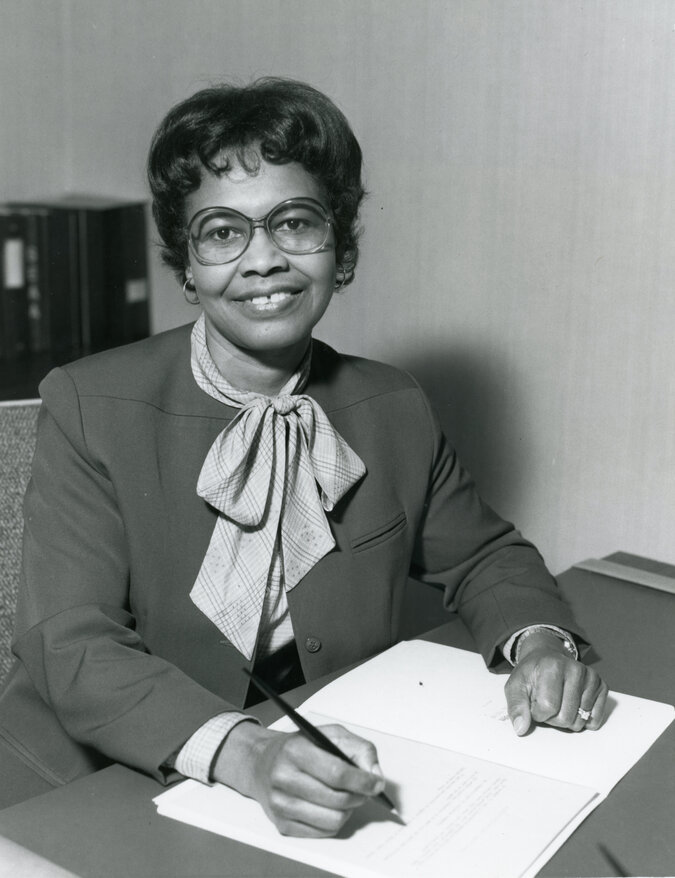
After graduation, she became a math and science teacher in segregated schools in Virginia, but searched for jobs as a mathematician (3). She received a letter about an interview to work for the Naval Proving Ground. West originally declined the offer, as she was unsure if they knew she was black. However, they were persistent in hiring her, and finally, she accepted the job (1).
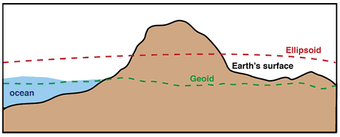
West worked at Dahlgren, an ordnance testing site. Her job was to calculate and predict weapon trajectories, and through this, she became keen on computer programming (4). Furthermore, using satellite data, she created precise models of the Earth, the geoid, and the reference ellipsoid, revolutionizing our understanding of its shape. The geoid model is an imaginary sea level that extends even on land masses. The ellipsoid is what the Earth would look like if it were a perfect sphere. If you were to add the geoid and ellipsoid model at any point, it equals the actual level of the Earth (5)! She also developed different models of satellite orbit trajectories. These three models were essential to the work scientists used when creating the Global Positioning System (GPS); without them, scientists would not be able to use satellites to determine a specific point on Earth (2).
West was hired around the time President Eisenhower enacted a law forbidding racism in the federal workforce (4). There, she was one of four black professionals and tried her best to be treated the same as her white coworkers. Additionally, most of her coworkers were men, so she faced both racial and sexist discrimination on a daily basis (3).
Since West worked for the Navy, all of her work was confidential to the public. Unlike the hidden figures at organizations like NASA, most of her work remains a secret to this day. As a result of this, she did not receive the same amount of recognition as other scientists who made similar discoveries (4). While the public may not be aware of all of the contributions West made to satellite technology, many now admire her work and discoveries. In 2018, she was inducted into the Air Force Space and Missile Pioneers Hall of Fame and won the Webby Lifetime Achievement Award in 2021 (6). Though West was not granted many appreciations during her lifetime, her discoveries helped to create important utilities like the GPS, something that billions of people use daily.
Bibliography
- Oct. 27, 1930: Birth of Gladys West, the Mathematician Who Laid the Groundwork for GPS. (2024). Aps.org. https://www.aps.org/apsnews/2024/09/west-mathematician-groundwork-gps
- kate.pickle@ncwit.org. (2021, April 7). Gladys West | NCWIT. Ncwit.org. https://ncwit.org/profile/gladys-west/
- Chappell, B. (2026, January 23). Gladys West, mathematician whose work paved the way for GPS, dies at 95. NPR. https://www.npr.org/2026/01/23/nx-s1-5685027/gladys-west-gps-mathematician
- Dr. Gladys Mae Brown West. (2026, February 25). Si.edu. https://airandspace.si.edu/stories/editorial/gladys-mae-brown-west
- What is a Geoid? Why do we use it and where does its shape come from? (2022, August 11). USGS. https://www.usgs.gov/faqs/what-a-geoid-why-do-we-use-it-and-where-does-its-shape-come
- Navy Scientist Helped Develop GPS. (2026). U.S. Department of War. https://www.war.gov/News/Feature-Stories/Story/article/3700859/navy-scientist-helped-develop-gps/
Images



Comments are closed.