
A neuroscientist scanned free solo climber Alex Honnold’s brain and found something remarkable
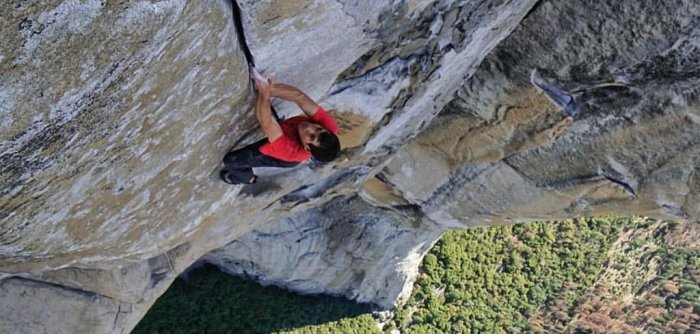
What does it feel like to have no fear? For most people, this is just a hypothetical, but for Alex Honnold, one of the most talented professional free soloers of all time, it might actually be true. In 2017, Honnold became the first person ever to ascend the 3,000-foot slab of granite known as El Capitan in Yosemite National Park. He wore no safety equipment, climbing gear, or ropes, and although one miscalculation could mean certain death, his brain kept calm and unbothered (1).
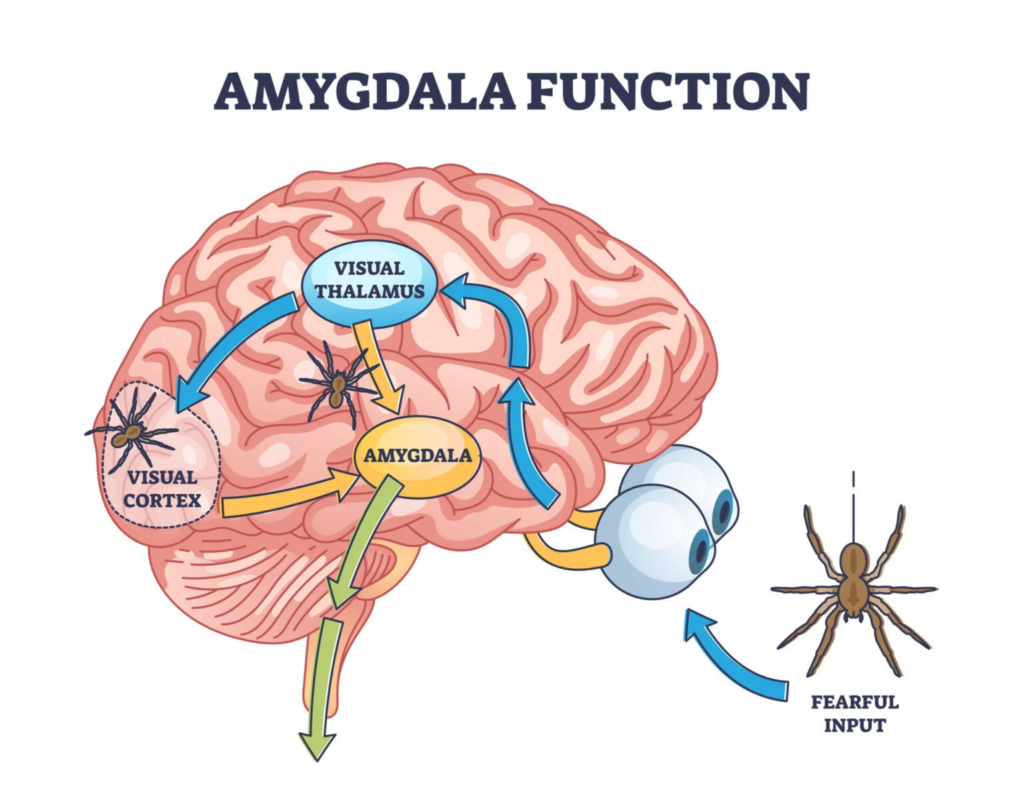
In 2016, neuroscientist Dr. Jane Joseph scanned Alex’s brain using a special scan called an fMRI, a tool that tracks blood flow across different regions of the brain. Dr. Joseph showed him around 200 images intended to make him feel uncomfortable and afraid, all to see if the amygdala would react. The amygdala is a small, almond-shaped area deep in the brain’s temporal lobe that is responsible for detecting threats and triggering the fight or flight response (2). She also showed the same images to a control subject, but when the results came back, Joseph found no reaction. In the control test, the amygdala lit up on the majority of images, but for Honnold, there was little to no visible activity (3).
So what are the reasons this happened? First, a rare genetic condition called Urbach-Weithe disease that can destroy amygdala tissue, leaving patients incapable of feeling fear (4). Second, genetics can more broadly play a role. Some individuals are simply born with lower amygdala reactivity. Third, and most likely in Honnold’s case, years of exposure to high-risk climbing have desensitized his amygdala, so there is a reduced fear response. Honnold agrees that with enough exposure, anybody can reduce sensitivity and develop a mental barrier to fear. He says that his lack of fear is not because he has a fundamentally different brain than others, but because of the seven years it took him to prepare for his free solo of El Capitan (5).
Although Alex Honnold is considered to be the greatest free soloer ever, he is still just as human as any of us. It simply took him years of conditioning his brain to get to where he is now. His case often leaves scientists wondering: if fear can be gradually trained away through exposure, what else can the brain unlearn? For the rest of us, Honnold’s story is a reminder that fear and the brain are not fixed, and that they can be rewired.
Bibliography
- Synnott, M. (2019, February). How Alex Honnold free solo climbed Yosemite’s El Capitan. National Geographic. https://www.nationalgeographic.com/magazine/article/alex-honnold-made-ultimate-climb-el-capitan-without-rope
- Science Times. (2026, March 28). Understanding the brain fear response and what neuroscience anxiety research reveals about amygdala function. Science Times https://www.sciencetimes.com/articles/61561/20260328/understanding-brain-fear-response-what-neuroscience-anxiety-research-reveals-about-amygdala.htm
- Greshko, M. (2026, January 26). How Alex Honnold can stay cool and collected as he climbs the impossible. Discover Magazine. https://www.discovermagazine.com/how-alex-honnold-can-stay-cool-and-collected-as-he-climbs-the-impossible-48589
- Icliniq Medical Team. (2024, July 8). What is Urbach-Wiethe disease? iCliniq. https://www.icliniq.com/articles/genetic-disorders/urbach-wiethe-disease
- Dinneen, C. (2026, January 23). Alex Honnold’s brain: What fMRI study revealed about climber’s lack of fear. Newsweek. https://www.newsweek.com/alex-honnolds-brain-what-fmri-study-revealed-about-climbers-lack-of-fear-11403975



Comments are closed.