
Why opening packages activates dopamine-driven reward circuits in the human brain
Before the box is even opened, your brain is already celebrating. As your fingers pull apart cardboard and peel back tape, neurons deep within the brain begin releasing dopamine, a chemical associated with motivation and reward. This feeling of excitement is not accidental. Unboxing, a seemingly ordinary experience, activates neural systems designed to respond to anticipation, novelty, and sensory stimulation.
At the center of this experience is the brain’s reward system, a network of regions that evolved to reinforce behaviors important for survival. Key components include the ventral tegmental area (VTA), which produces dopamine, and the nucleus accumbens, which processes reward and pleasure (1). When dopamine is released into this circuit, it signals that something valuable or motivating is about to occur, encouraging the brain to pay attention and repeat the behavior in the future.
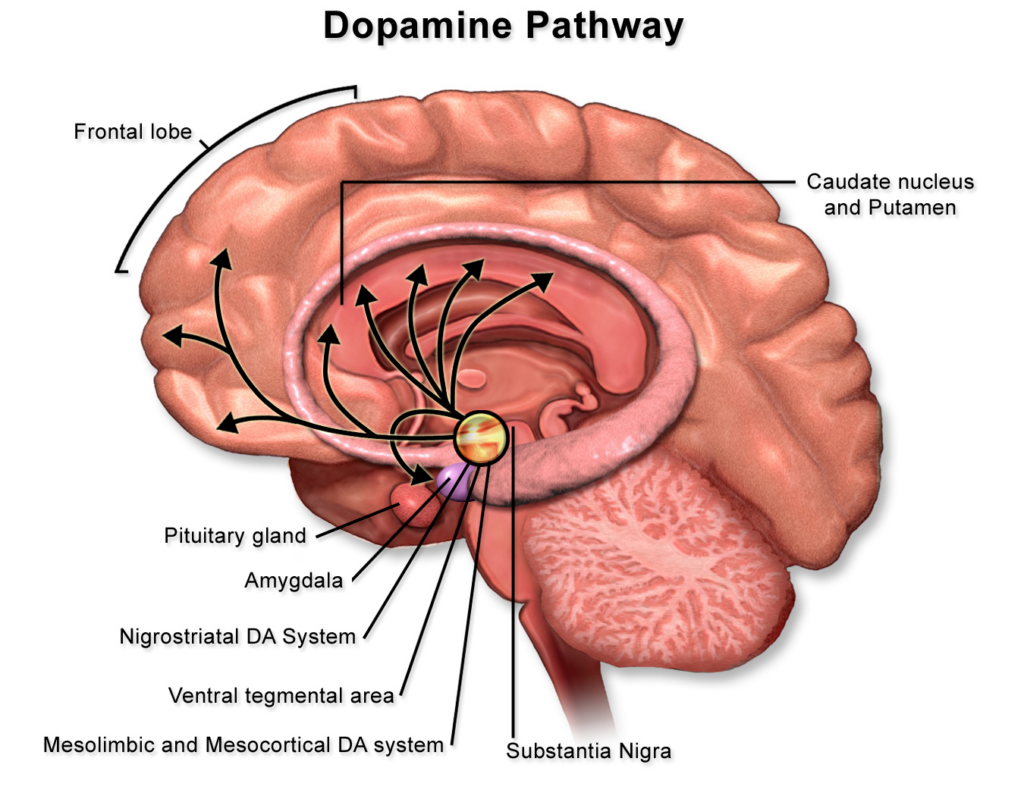
One of the strongest drivers of this dopamine response is anticipation. Research has shown that dopamine release is often greater when a reward is expected than when it is actually received (2). Waiting for a package to arrive, tracking it online, and imagining what is inside all build uncertainty and expectation. This prolonged anticipation primes the reward system, making the moment of unboxing more emotionally intense than the object itself.
Novelty also plays a critical role. Because novelty once helped early humans identify opportunities or threats, the human brain remains highly responsive to unpredictable stimuli. Unboxing introduces uncertainty, as the contents remain unknown until the package is opened. This unpredictability increases dopamine activity, similar to the response seen in games of chance or surprise-based rewards (3). Products such as mystery boxes or blind packaging amplify this effect by maximizing uncertainty.
Sensory stimulation further enhances the reward response. The sounds of tearing packaging, the texture of materials, and the visual reveal of a new object activate multiple sensory pathways simultaneously (2). The brain integrates these signals to create a richer emotional experience. Multisensory input strengthens memory formation and emotional engagement, making the unboxing moment more memorable and satisfying (4).
Beyond biology, psychological factors also contribute to the enjoyment of unboxing. The act often marks the moment when an object becomes “yours,” triggering the endowment effect, the tendency to value owned items more highly than identical unowned ones (5). For some individuals, unboxing can also provide stress relief or a sense of control. Additionally, sharing the experience through unboxing videos introduces social validation and reinforcement.

Understanding the neuroscience behind unboxing also raises ethical questions. Many companies intentionally design packaging to exploit reward mechanisms, a practice known as neuromarketing. While effective, this strategy may encourage impulsive buying and overconsumption. Recognizing how the brain responds to unboxing can help consumers make more mindful decisions about their purchasing behaviors.
Ultimately, unboxing feels satisfying because it aligns closely with how the brain’s reward system functions. By combining anticipation, novelty, and sensory stimulation, this simple act taps into powerful neural circuits that evolved long before cardboard boxes existed.
References:
- Guy-Evans, Olivia. “Brain Reward System” Retrieved from https://www.simplypsychology.org/brain-reward-system.html
- Bouret, Sebastien & Walton, Mark. “What is the Relationship between Dopamine and Effort?” Retrieved from https://pmc.ncbi.nlm.nih.gov/articles/PMC6352317
- S Bromberg-Martin, Ethan & Matsumoto, Masayuki & Hikosaka, Okihide. “Dopamine in motivational control: rewarding, aversive, and alerting” Retrieved fromhttps://pmc.ncbi.nlm.nih.gov/articles/PMC3032992
- Stadler, Raphaela. “ The role of sensory design in creating memorable event experiences.” Retrieved from https://www.emerald.com/ijefm/article/17/1/45/1278098/The-role-of-sensory-design-in-creating-memorable
- Ganti, Akhilesh. “Understanding the Endowment Effect: Causes, Examples, and Impacts” Retrieved from https://www.investopedia.com/terms/e/endowment-effect.asp
Images:




Comments are closed.