
Scientists find microplastics in human blood, raising health concerns and prompting further research
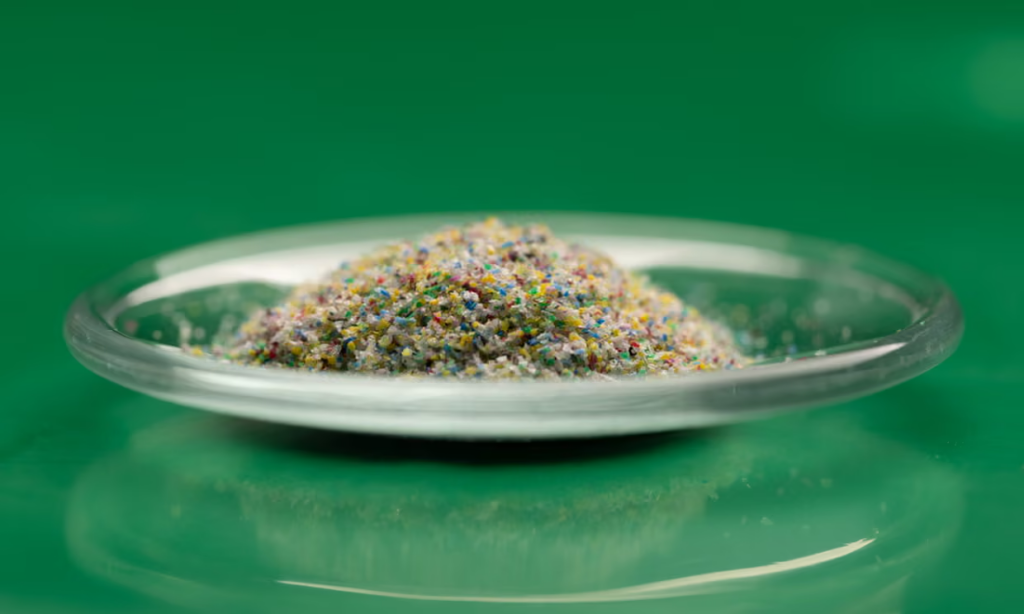
Adults are estimated to consume microplastics equivalent to one credit card per week (1). Microplastics are everywhere, from the peaks of Mount Everest to coral reefs, to the food we eat and the water we drink. Microplastics are plastic fragments up to 5 millimeters long, and between 10 and 40 million metric tons of them are released into the environment every year. The majority of microplastics originate from synthetic textiles, tire wear, larger plastic degradation, and industrial processes. In 2018, microplastics were discovered in human feces, prompting many subsequent studies. In 2022, Dutch scientists found microplastics in the blood of 80% of healthy subjects (2). As scientists continue to uncover how these tiny particles enter our bodies, new research raises increasingly urgent questions about their potential effects.
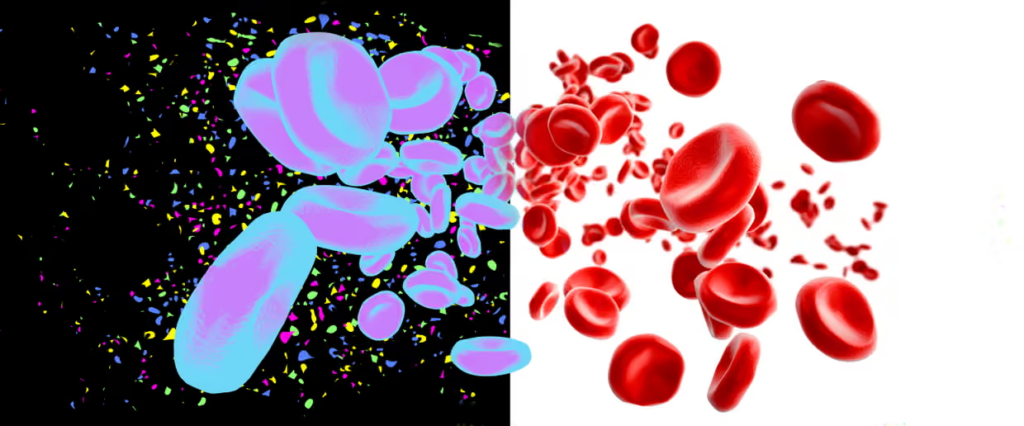
“Plastic never goes away [and] just breaks down into finer and finer particles,” says Desiree Labeaud, a pediatric infectious disease physician at Stanford Medicine (1). Microplastics have been found not only in human blood but also in organs, tissues, the heart, and even in newborn babies (1,2). Although further research is necessary, existing studies on human cells and animals have shown that microplastic exposure may be linked to cancer, heart attacks, reproductive issues, and other health effects (1,2). Animal studies have shown a wide range of negative outcomes, such as increased vulnerability to infections, inflammation, altered metabolic function, and cellular damage (1).
Despite these findings, significant uncertainty remains in microplastic research. Scientists are unsure how long microplastics linger in the body, the role genetics may play, and how different types of plastics may affect the body in distinct ways (1,3). Research is complicated by a lack of standardization in the identification of microplastics, specifically their size, type, and shape (4). Eliminating contamination is also difficult due to the ubiquity of plastic, even within laboratory settings (1,4). Experts argue that detecting micro- and nanoplastics is extremely challenging due to their size. Consequently, there is skepticism about research regarding microplastics in humans, as some studies are being questioned for contamination, faulty methods, and false positives. In addition, certain techniques may mistake plastic for human biological substances, such as fat (which is known to yield a false positive for polyethylene) (4). While these claims might discredit some studies, there remains broad agreement that microplastics are present in the human body and blood.
A study published by Leslie et al. (2022) in Amsterdam supported the idea that human exposure to plastic particles can lead to their absorption into the bloodstream (3). Despite doubts about the prevalence and amount of microplastics in humans, there is a consensus that human exposure to microplastics is occurring, and further research is needed. In the meantime, experts suggest reducing exposure to microplastics by minimizing plastic use in food preparation, wearing natural-fiber clothing, and replacing plastic containers for glass or metal. Dr. Cassandra Rauert, an environmental chemist at the University of Queensland, says that most micro- and nanoplastics are likely expelled by our bodies, but reducing microplastic exposure “can’t hurt” (4). In conclusion, while we should be aware of microplastics, current studies suggest that, for now, they are not something to fear.
Bibliography
- Savchuk, K. (2025, January 29). Microplastics and our health: What the science says, Stanford Medicine. https://med.stanford.edu/news/insights/2025/01/microplastics-in-body-polluted-tiny-plastic-fragments.html
- Carrington, D. (2022, March 24). Microplastics found in human blood for first time, The Guardian. https://www.theguardian.com/environment/2022/mar/24/microplastics-found-in-human-blood-for-first-time
- Leslie, H., Velzen, M., Brandsma, S., Vethaak, A., Garcia-Vallejo & J., Lamoree, M. (2022). Discovery and quantification of plastic particle pollution in human blood. Environment International, 163, https://doi.org/10.1016/j.envint.2022.107199
- Carrington, D. (2026, January 13). ‘A bombshell’: doubt cast on discovery of microplastics throughout human body, The Guardian. https://www.theguardian.com/environment/2026/jan/13/microplastics-human-body-doubt
Images


Comments are closed.