
The pandemic officially ended. For Long COVID patients, it never did.
Approximately 16 million were diagnosed with COVID-19 in 2020 and continue to suffer from its effects today. In 2024, scientists discovered that a blood coagulation protein called fibrin is largely responsible for the blood clots and inflammation that occur as key symptoms of COVID-19. These proteins not only cause symptoms but also prevent the body from completely clearing the virus (1). A study conducted by the National Institutes of Health found that one in ten people who experienced a SARS-CoV-2 infection, continue to have symptoms for a year or longer (2). Some symptoms become so severe that affected individuals are unable to continue with school or work, significantly impacting their daily function and quality of life.
Although Long COVID symptoms after the initial infection, Long COVID is thought to originate from viral fragments lingering in the body after the acute phase of illness. These fragments lodge and trigger inflammation in blood vessels, affecting the cells that line them. The inflamed vessels clot, causing veins and capillaries to become obstructed. This also cuts off the tissue’s oxygen supply, which can lead to organ failure (2). Later, widespread inflammation and organ damage may develop organ disease and symptoms such as fatigue, brain fog, and shortness of breath. Systemic Exertion Intolerance Disease (SEID) can also occur, which stems from cells being starved of oxygen and immune activation triggered by viral infections (3).
Long COVID has severe effects on multiple body systems. For example, Long COVID heavily targets the thoracic cavity, placing individuals at higher risk for heart attack, coronary heart disease, deep vein thrombosis, and respiratory viral infections. Reduced oxygen to tissues may also cause acute myocardial infarction (AMI) or a stroke (4). Another region commonly affected by Long COVID is the brain. It can damage communication in the brainstem or the vagus nerve, a nerve that controls automatic functions in the body (5). It may also result in the loss of gray and white matter and disrupt the blood-brain barrier. In addition, the disease can affect the immune system, since increased cell turnover may accelerate the aging of immune cells. Finally, Long COVID may target the endocrine system, leading to metabolic abnormalities.
Long COVID can cause extensive damage to the body, and it has been shown to hospitalize between 10% and 30% of people after just one infection (4). Damage may occur even without symptoms and lead to seemingly sudden heart attacks or strokes. Consequences range from sudden severe events, shortened lifespan, and long-term reductions in quality of life.
In conclusion, Long COVID is a debilitating condition that has affected millions of people since the pandemic’s start, with lifelong consequences. As scientists have recently discovered, the viral fragments left over from previous COVID-19 infections and proteins like fibrin can trigger blood clots and chronic inflammation, leading to widespread systemic damage. This damage may manifest through severe cardiovascular events, neurological impairment, and dysfunction of the immune and endocrine systems. Long COVID therefore represents a serious public health crisis that extends far beyond the initial viral infection.
Bibliography
- Quigley, Kelly. “Discovery of How Blood Clots Harm Brain and Body in COVID-19 Points to New Therapy.” Gladstone.org, 2024, gladstone.org/news/discovery-how-blood-clots-harm-brain-and-body-covid-19-points-new-therapy.
- Schmidt, Charles. “Bad Blood? The Uncertainty around Microclots and Long COVID.” Www.gavi.org, 2024, www.gavi.org/vaccineswork/bad-blood-uncertainty-around-microclots-and-long-covid.
- “Scientists Reveal Another Piece in the Long COVID Puzzle.” The Transmission, 12 Nov. 2025, www.unmc.edu/healthsecurity/transmission/2025/11/12/scientists-reveal-another-piece-in-the-long-covid-puzzle/.
- Ewing, Andrew G, et al. “Review of Organ Damage from COVID and Long COVID: A Disease with a Spectrum of Pathology.” Medical Review, vol. 0, no. 0, 2 July 2024, https://doi.org/10.1515/mr-2024-0030.
- Mayo Clinic Staff. “COVID-19 (Coronavirus): Long-Term Effects.” Mayo Clinic, 18 Aug. 2020, www.mayoclinic.org/diseases-conditions/coronavirus/in-depth/coronavirus-long-term-effects/art-20490351.
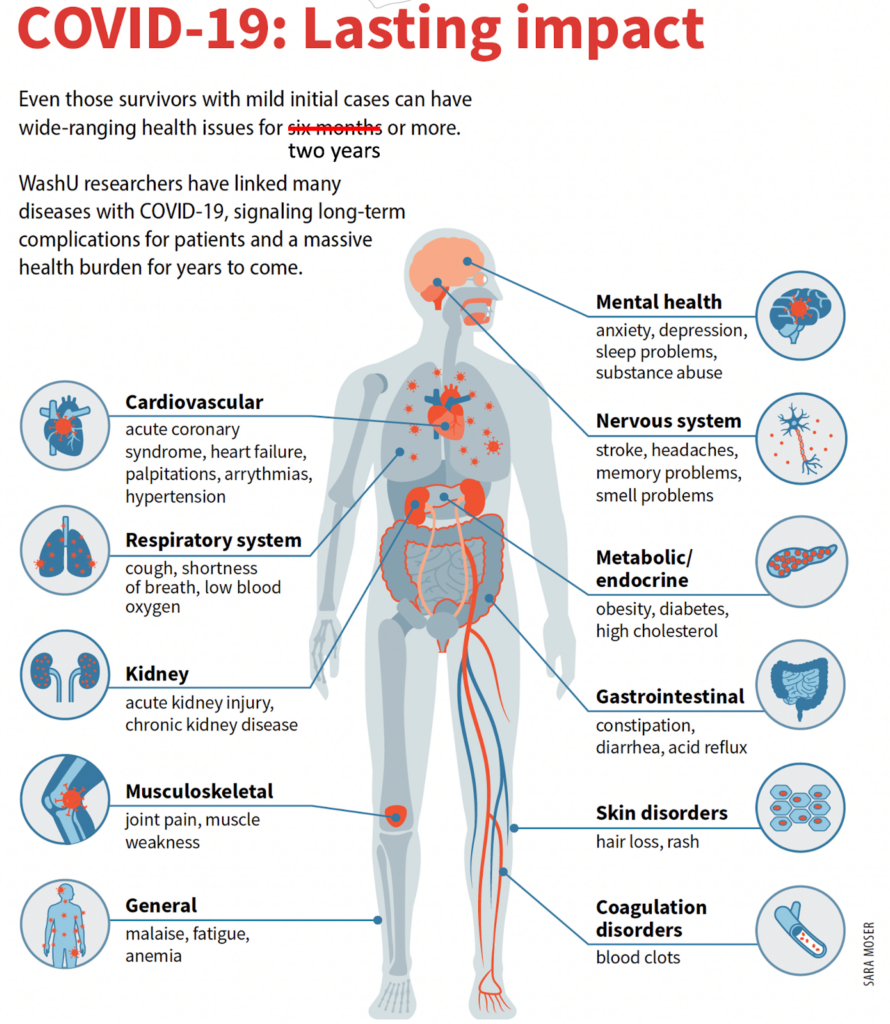
Lasting impacts of Long COVID on body systems.
Ground Truths | Eric Topol – SubstackLong-Term Long Covid – by Eric Topol …

Viral fragment that lingers in the body after past COVID symptoms.




Comments are closed.