
The history of how a laboratory dog revolutionized diabetes treatment and saved millions of lives.
For centuries, diabetes remained a mysterious and deadly disease with no effective treatment, forcing physicians to rely on starvation to keep patients alive. This grim reality persisted until scientists began to understand the role of insulin in regulating blood glucose levels.
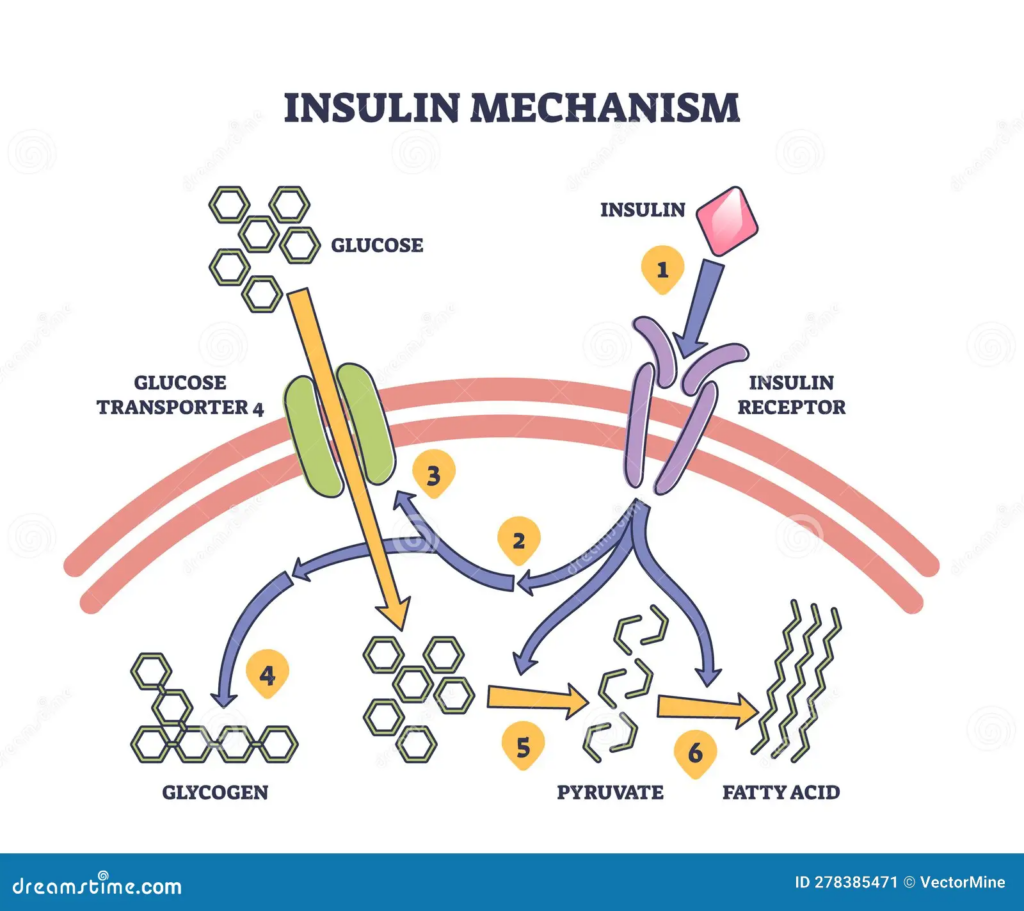
Insulin is essential in the body because it transfers glucose from the bloodstream into cells throughout the body. Glucose is the body’s main source of life and comes from food, drink, and the body’s natural release of stored glucose (glycogen). Glucose is necessary to provide energy to cells for them to function efficiently. Without insulin, cells cannot receive glucose, which then builds up in the bloodstream and leads to high blood sugar (1). This can lead to a common condition called diabetes, where the pancreas does not make a sufficient amount of insulin.
Before scientists discovered that insulin was the key to managing diabetes, they believed that patients should eat more calories to compensate for their disruptions in hormone regulation and metabolism. However, some physicians started noticing that it was fasting, not an increase in calories, that improved the symptoms of diabetes. Physicians such as Apollinaire Bouchardat (1809-1886), who became famous for advising sugar-free diets, and Elliott Proctor Joslin (1869-1962), who emphasized a “starvation diet”, mainly advised prolonged fasting and under-nourishment as a cure for diabetes (2).
In the early 20th century, doctors had determined that diabetes was a pancreatic disease, linked to specialized clusters of cells known as the islet cells, special cells in the pancreas which regulate blood sugar (3). Scientists attempted to prepare pancreatic extracts that could lower blood glucose. However, due to an inability to remove impurities, toxic reactions prevented its usage in humans (4).
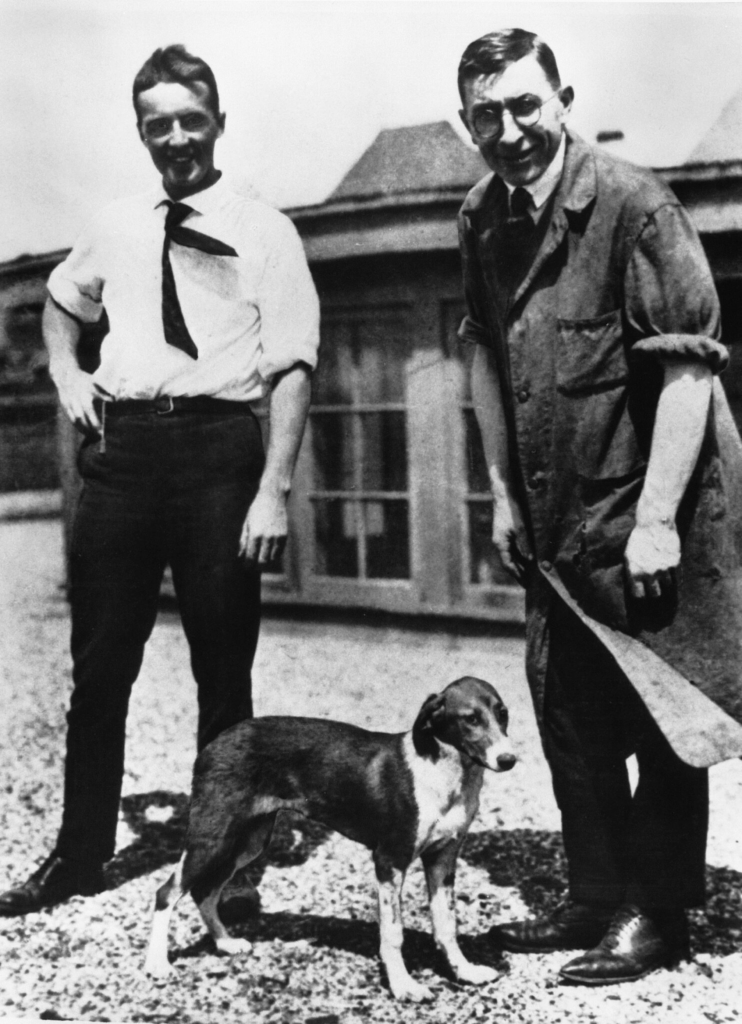
The breakthrough came largely by accident in the early 1920s through a combination of timing and good luck. During this time, a young surgeon named Frederick Banting had an idea for solving the diabetes enigma. For his hypothesis, the key was isolating a pure version of pancreatic extract that can safely treat diabetes (3). Banting and his assistant, Charles Herbert Best, began experimentation on laboratory dogs in May 1921. Following earlier research, Banting and Best studied diabetes through an experimental combination of duct ligation (tying off the pancreatic duct to the small intestine) and pancreatectomy (complete surgical removal of the pancreas) (3).
Duct ligation caused the acini cells, which produce digestive enzymes, to decrease in size and leave the islet cells behind. Dogs with duct-ligated pancreases did not develop any diabetes, while dogs that underwent pancreatectomy immediately developed severe diabetes because of their lack of pancreatic tissue (3). Banter’s key idea, formulated on October 30, 1920, was to ligate the pancreatic ducts, allow the acini cells to degenerate, and then extract the remaining pancreatic secretions (3). This approach was not originally intended to isolate insulin but proved later to be the crucial step.
Banter’s early experiments failed, as it was difficult to keep duct-ligated and depancreatized dogs alive long enough to test the extracts. However, after many setbacks and failures in the summer, the experimental team reported a miracle in the fall: A severely diabetic dog was kept alive using injections of an extract made from a duct-ligated pancreas. Remarkably, this extract, now famously known as insulin, drastically lowered the blood sugar levels of all the diabetic experimental dogs’ glucose (3).
Researchers refined their production techniques for insulin to be accessed by all, and the first commercial supply of insulin was shipped in October 1923. Banting received the 1923 Nobel Prize in Physiology or Medicine in the same month (4).
The discovery of insulin revolutionized medicine, and this treatment remains one of the most important medical discoveries in history, saving millions of lives and continuing to be invaluable in modern healthcare.
Bibliography
- Cleveland Clinic. (2024, January 17). Insulin. Cleveland Clinic. https://my.clevelandclinic.org/health/body/22601-insulin
- Vecchio, I., Tornali, C., Bragazzi, N. L., & Martini, M. (2018). The Discovery of Insulin: an Important Milestone in the History of Medicine. Frontiers in Endocrinology, 9(613). National Library of Medicine. https://doi.org/10.3389/fendo.2018.00613
- Science History Institute. (n.d.). Frederick Banting, Charles Best, James Collip, and John Macleod. Science History Institute. https://www.sciencehistory.org/education/scientific-biographies/frederick-banting-charles-best-james-collip-and-john-macleod/
- Rydén, J. (2024, November 13). The “miracle” discovery that reversed the diabetes death sentence. NobelPrize.org. https://www.nobelprize.org/the-miracle-discovery-that-reversed-the-diabetes-death-sentence/
Images
- https://www.sciencehistory.org/education/scientific-biographies/frederick-banting-charles-best-james-collip-and-john-macleod/
- https://www.dreamstime.com/insulin-mechanism-explanation-medical-process-steps-outline-diagram-labeled-educational-scheme-receptor-glycogen-pyruvate-image278385471


Comments are closed.