
The Truth Behind the 10% Theory
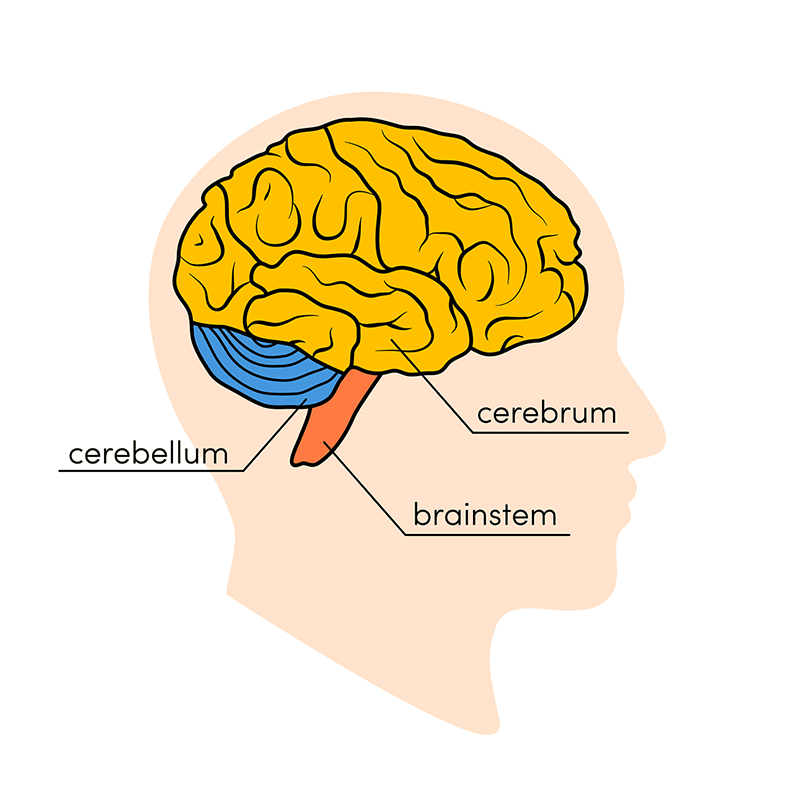
The notion that we use only 10% of our brains is a common misconception that dates back over 100 years (1). Though it is impossible to know who came up with this theory, many think of William James, who argued that “we are making use of only a small part of our possible mental and physical resources” in his book The Energies of Men (2). The brain can be divided into three main sections, each with different functions: the cerebrum, the cerebellum, and the brainstem. The cerebrum, the largest of the three, intakes information from the five senses and manages conscious actions. The cerebellum sustains balance, posture, and fine motor skills, while the brainstem controls the subconscious functions, like breathing, heartbeat, and sleep. It also connects the brain to the spinal cord, making up the central nervous system (3). These sections can be split into more subsections, each with various functions. According to Harvard’s Health Watch, when one part of the brain is active, only a small percentage of its cells are put to use at any given moment. However, this does not mean that the remaining cells are inactive; you may be using 10% of your brain right now, but you will use the other 90% in other scenarios (4). Many people think humans only use 10% of their brains in total, which is not true. What is true, however, is that we can use only 10% at any given moment.
Bibliography
- Hale, J. (2020, February 28). Why We Use More Than 10 Percent Of Our Brain Power. Centerforinquiry.org; Center for Inquiry. https://centerforinquiry.org/blog/why-we-use-more-than-10-percent-of-our-brain-power/
- Boyd, R. (2008, February 7). Do People Only Use 10 Percent of Their Brains? Scientific American. https://www.scientificamerican.com/article/do-people-only-use-10-percent-of-their-brains/
- Clinic, C. (2022, April 4). Brain: Parts, Function, How It Works & Conditions. Cleveland Clinic. https://my.clevelandclinic.org/health/body/22638-brain
- Solan, M. (2021, October). You don’t say? Brain space – Harvard Health. Harvard Health. https://www.health.harvard.edu/mind-and-mood/you-dont-say-brain-space
Images





Comments are closed.