
How world-changing discoveries became viral before they were verified
Did you know that some particles move faster than light? Or have you heard about the discovery of nearly unlimited energy? I hadn’t either—but in the past, these so-called “discoveries” made worldwide headlines before they were eventually debunked. So, what was the hype all about?
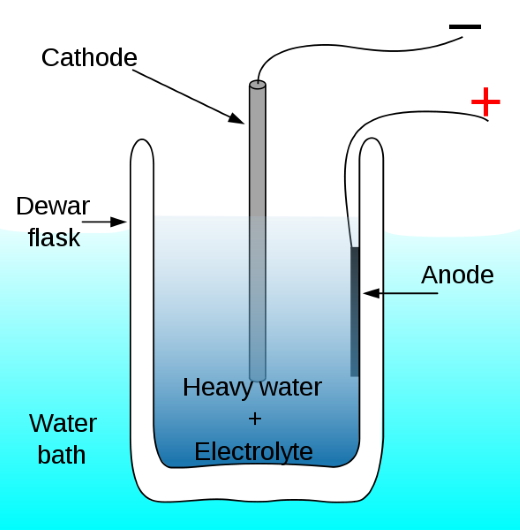
One of the most defining moments in nuclear fusion occurred in 1989 when Martin Fleischmann and Stanley Pons claimed to have invented cold fusion. The scientists asserted they had found a way to fuse atoms at temperatures as low as 86°F (1,3). Compared to traditional fusion, which occurs at about 27,000,000° F, their so-called breakthrough promised nearly unlimited amounts of energy. It sounded too good to be true, and soon after, scientists debunked the experiment when its results could not be reproduced (1,2). Just a month later, cold fusion was considered “dead” and “a circus” (1,2,3).
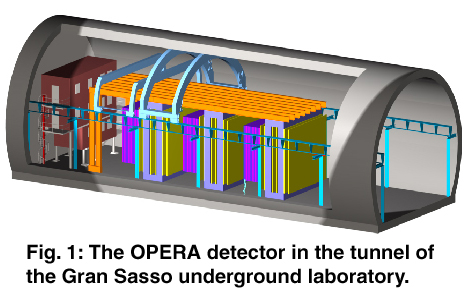
In 2011, physicists at CERN (Conseil Européen pour la Recherche Nucléaire) and the Gran Sasso Laboratory took a safer approach. When the OPERA experiment appeared to break the “speed limit of the universe,” measuring neutrinos that were 0.0024% faster than light, the team chose not to submit their findings to a journal. If true, these results would have rewritten modern-day physics (4,5). Even as news agencies began reporting on their findings, the team made it clear that their results were not yet verified—and for good reason: later in 2012, the scientists discovered faulty timing equipment at the lab site (4,5).
Together, these cases illustrate how easily false claims can spread before they are properly validated, and remind us of the importance of scientific rigor. So, if your next experiment does not go as planned, don’t be discouraged: you might be on track for the next great scientific “breakthrough!”
Bibliography:
- Alberty, E. (2024, March 18). The University of Utah claimed it achieved cold fusion 35 years ago this week. Axios; Axios Salt Lake City. https://www.axios.com/local/salt-lake-city/2024/03/18/cold-fusion-1989-university-utah-pons-fleischmann
- Cold fusion. (2026). Berkeley.edu. https://undsci.berkeley.edu/cold-fusion-a-case-study-for-scientific-behavior/
- Fleischmann–Pons Experiment. (2022, October 26). Encyclopedia.pub; HandWiki. https://encyclopedia.pub/entry/31286
- Kim, G. (2024, February 11). Faster Than Lightspeed: These Neutrinos Were Faster Than The Speed Of Light—Until They Weren’t – Yale Scientific Magazine. Yalescientific.org. https://www.yalescientific.org/2024/02/faster-than-lightspeed-these-neutrinos-were-faster-than-the-speed-of-light-until-they-werent/
- Faster than light neutrinos? | American Association for the Advancement of Science (AAAS). (2026). American Association for the Advancement of Science (AAAS). https://www.aaas.org/taxonomy/term/9/faster-light-neutrinos
Images:




Comments are closed.