
The invisible light emitted by humans and what it can reveal about the body
Imagine the human eye was 1,000,000 times more powerful than it currently is. Just how much more would we see? We would be able to see the faint bioluminescent glow of other people. Bioluminescence is light produced by chemical reactions in living organisms, and humans naturally emit this light. As strange as it may sound to be constantly glowing, it’s real, and it’s measurable (1). But how was this phenomenon discovered? How does it happen, and why can’t we see it? Do humans glow the same way as other bioluminescent animals, and what can this reveal about the human body?
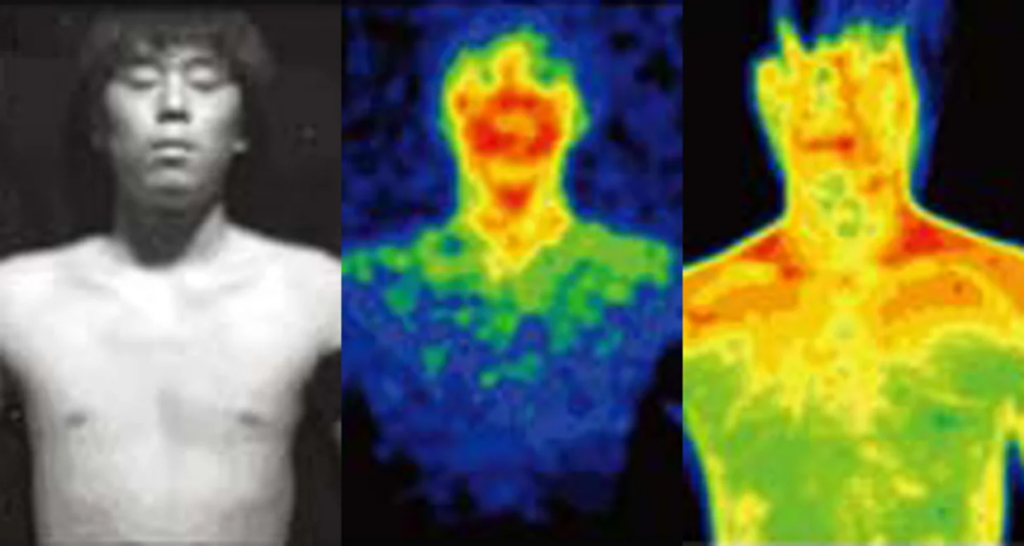
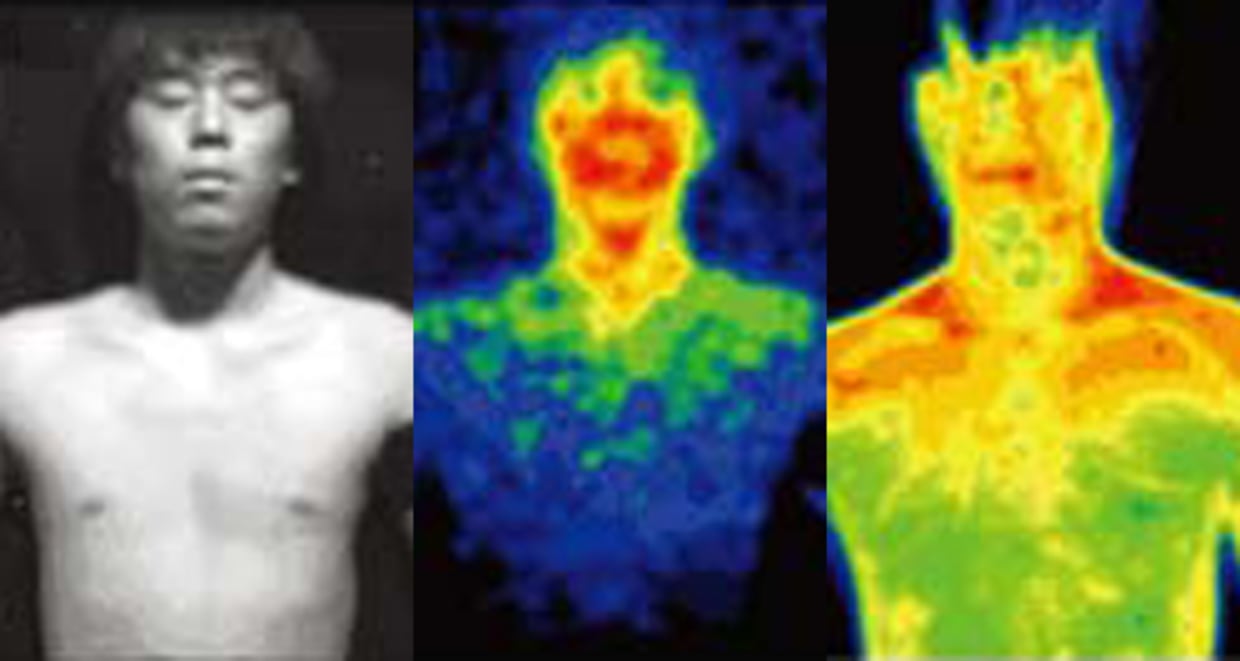
In 2009, a group of Japanese researchers experimented on bioluminescence within humans. They used ultra-sensitive cameras to monitor five men over three days in a light-tight room. Every three hours, for 20 minutes, the researchers recorded how much light the men emitted. The researchers discovered that humans did, in fact, glow, with the brightest regions being their cheeks, neck, and forehead. A potential explanation for this was that those parts of the body are generally more exposed to sunlight, which can increase melanin levels in the skin. Melanin, a natural pigment in skin, influences the skin to react to light more. So, higher levels of melanin from sun exposure may create a stronger luminescent emission reaction in these areas.
Why does the human body glow? During cellular respiration, the process by which cells make energy, a byproduct called free radicals is generated. Free radicals are very small and highly reactive molecules. When free-floating lipids and proteins bump and interact with free radicals, the free radicals become excited. The free radicals then interact with the molecules fluorophores, and the fluorophores receive the excited free radical’s energy. The fluorophores then release a photon, a tiny bit of light. These photons give the body a faint glow (2). The process is known as ultraweak photon emission or UPE. The UPE is between 1,000 and 1,000,000 times dimmer than what the human eye can detect, so it is overwhelmed by other light.
One contributor to UPE is oxidative stress. When cells are stressed from aging, illness, or everyday damage, they create more reactive oxygen species, also called ROS. The more ROS produced, the more energy-transfer reactions between free radicals and fluorophores, and therefore the more light produced. Thus, oxidative stress can amplify the light that the body is already emitting. This glow, however, doesn’t last forever. When an organism dies, these light emitting reactions stop, as the organism is no longer metabolizing (1).
Many other animals are also bioluminescent, although they don’t always glow the same way or for the same reasons that humans do. Bioluminescence is most commonly observed in marine animals like jellyfish, sea stars, algae, sharks, and fish. Similar to humans, these animals bioluminesce from a chemical reaction that creates light. Luciferin is a key molecule in this reaction, as it creates light when reacting with oxygen. Different animals have different kinds of luciferin, which can make animals’ bioluminescent displays vary. Unlike humans, this light isn’t just a byproduct of making energy; very often, it is made to help the organism survive and reproduce. For example, animals can use their glow to shoot out bioluminescent ink to defend themselves, lure prey into a trap, or attract mates. Lastly, unlike humans, the bioluminescence of many animals is bright blue-green and visible to the human eye. (3).

As intriguing as human bioluminescence may be, it may have practical applications. Scientists have discovered that observing individuals’ light can indicate health issues. As mentioned earlier, more oxidative stress means there is more ROS and therefore more light. Because oxidative stress is associated with aging, cellular damage, and disease, if more light is emitted from someone this indicates poorer health conditions. Some scientists believe that if they observe people under ultra-sensitive cameras they can estimate cell damage or see disease progression, aging, or an illness before symptoms develop. Although some think this can be a next step in enhancing medicine and treatments, this technique cannot yet be used as a standard medical test, as the glow is extremely weak and it can be influenced by other factors, such as previous sun exposure (1).
Even though this glow is invisible to humans without special equipment, it can provide insight into the chemical processes that occur in the body. Studying these UPEs may allow scientists to better understand and detect health conditions, and it could one day be a medical tool used to save lives.
Bibliography
- Hatty Willmoth. (2025, May 20). All humans emit subtle light until they die, study suggests. BBC Science Focus Magazine. https://www.sciencefocus.com/news/all-living-things-faintly-glow-ultraweak-photon-emission-upe
- Hrala, J. (2016, November 9). You Can’t See It, But Humans Actually Glow With Our Own Form of Bioluminescence. ScienceAlert. https://www.sciencealert.com/you-can-t-see-it-but-humans-actually-glow-in-visible-light
- Bioluminescence. (2023, May 11). Smithsonian Ocean. https://ocean.si.edu/ocean-life/fish/bioluminescence
Images



Comments are closed.