
How the Body Recovers Every Night in Four Unique Steps
Every night, while we lay motionless, the brain is full of activity, repairing cells, consolidating memories, and preparing you for the challenges of the next day. This nightly restoration doesn’t happen all at once. Rather than being one uniform state, sleep unfolds in four distinct, repeating stages, each contributing uniquely to our health and cognitive function. So what are these stages? The first three are all classified into the category of non-rapid eye movement (non-REM) sleep, known as N1, N2, and N3. The last stage is rapid eye movement (REM) sleep (1).
N1 is the lightest stage of sleep and occurs as a person begins to fall asleep. This stage is often described as a hazy drift in and out of awareness; sudden movements can jolt someone in N1 back into reality. This stage is typically the shortest, lasting as little as seven minutes although its duration depends on various external factors, such as temperature and distractions. Along with being the shortest stage, N1 is unique in that it occurs not only when you first fall asleep, but also when the body transitions back into sleep after brief awakenings during the night (2).
N2 is still considered light sleep, but here the body changes more noticeably: heart rate slows, body temperature drops, breathing steadies, and muscles relax. On the brain wave level, the brain produces types of waves called sleep spindles and K-complexes, patterns believed to guard against waking and consolidate memories from the day into long-term storage. Each N2 stage lasts around fifteen to twenty-five minutes, and the body spends around half of its time asleep in this phase (3).
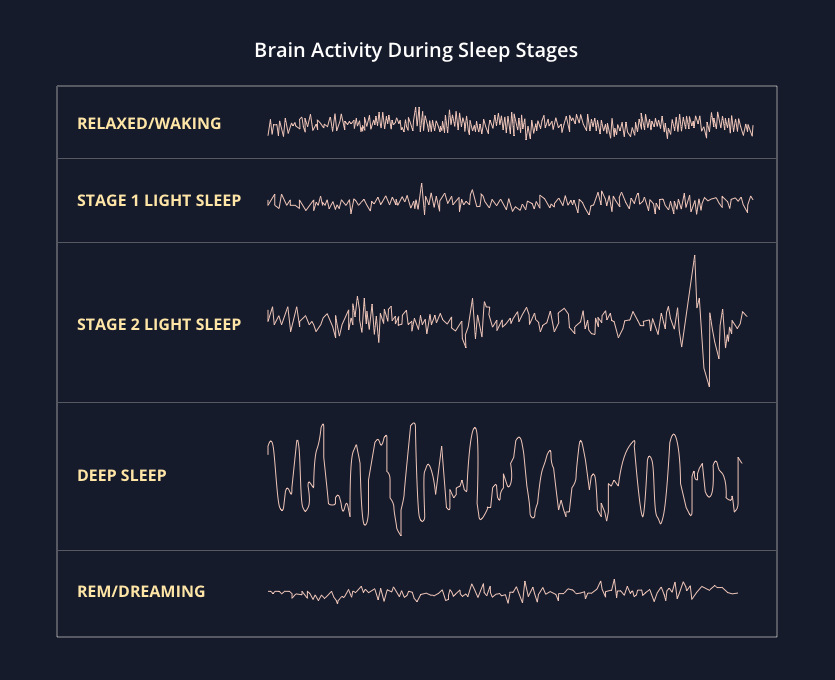
N3, also known as deep sleep or delta sleep, is where sleep provides its most restorative benefits. In N3 sleep, brain waves slow significantly, dominated mostly by delta waves, and the body enters a state of deep rest. This is the state it is hardest to awaken from, and when it does occur, the body can often feel very groggy (4). N3 sleep is critical for recovery, immune function, and other repair processes. Adults typically spend 20-30% of their nightly sleep in this stage. For example, a seven to nine-hour night equates to about forty to one hundred minutes (5).
After passing through the non-REM stages of sleep, the body enters REM sleep, a stage quite different from the rest. During this stage, brain waves spike to levels similar to wakefulness, and vivid dreaming usually takes place. Despite all of this mental activity, the body remains paralyzed in a state called atonia, which prevents us from acting out on our dreams. REM sleep is closely tied to cognitive function, playing a large role in memory consolidation, learning, and emotional regulation. The first REM period of the night lasts about ten minutes, but each one gets progressively longer, with the last one reaching around an hour. REM takes up approximately 20% of a night’s sleep (6).
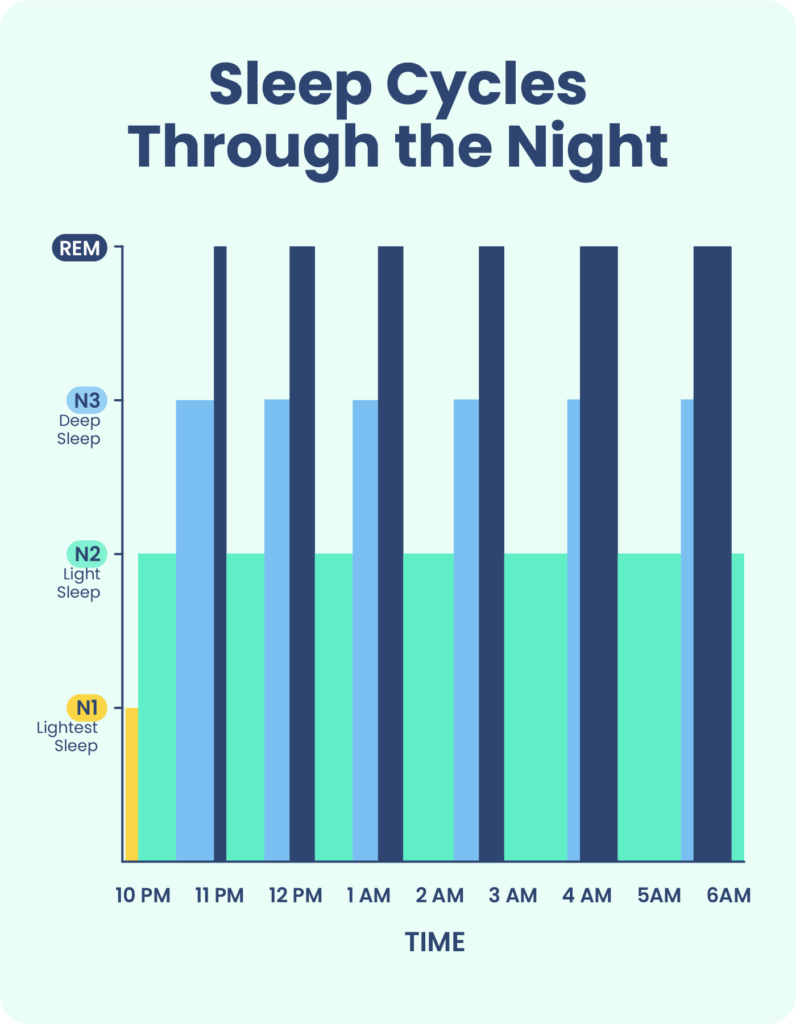
Together, these four stages form the sleep cycle, repeating throughout the night to restore us physically and mentally. By understanding these stages, we can better appreciate why consistent, high-quality sleep is essential to everyday life.
Sources:
- Stages of Sleep: What Happens in a Normal Sleep Cycle? (2021, December 2). Sleep Foundation. https://www.sleepfoundation.org/stages-of-sleep
- IBID
- Colten, H. R., Altevogt, B. M., & US), M. (2025). Sleep Physiology. Nih.gov; National Academies Press (US). https://www.ncbi.nlm.nih.gov/books/NBK19956/?utm_source=chatgpt.com
- Clinic, C. (2023, September). Sleep: What It Is, Why It’s Important, Stages, REM & NREM. Cleveland Clinic. https://my.clevelandclinic.org/health/body/12148-sleep-basics
- Sleep stages: what are they and why are they important? (2023, May 2). Sleepstation.org.uk. https://www.sleepstation.org.uk/articles/sleep-science/sleep-stages/?utm_source=chatgpt.com
- Clinic, C. (2023, September). Sleep: What It Is, Why It’s Important, Stages, REM & NREM. Cleveland Clinic. https://my.clevelandclinic.org/health/body/12148-sleep-basics
Images:


Comments are closed.